RegNext transforms binding regulatory requirements into structured, governed obligations and audit-ready, certifiable compliance outcomes across risk, governance, and regulatory reporting.
Built for global financial institutions, FinTechs, and regulated enterprises operating across complex, multi-jurisdictional regulatory landscapes.
![[digital project] image of a case file on a tablet with legal tech elements](https://cdn.prod.website-files.com/6939e67cb72e0c490be966d7/695e671090797c83b825fe87_capa1.jpg)
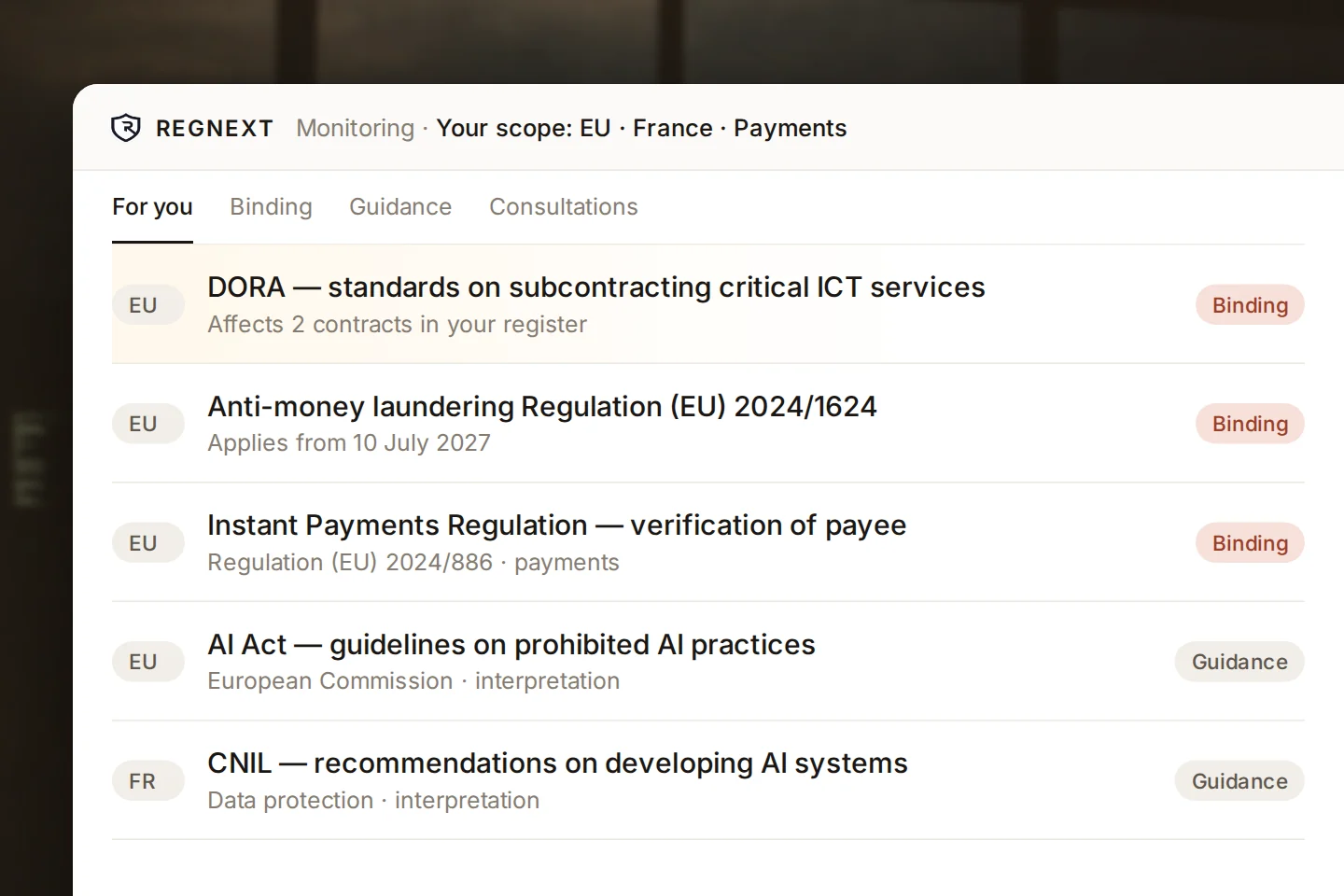
Publications from global regulators, supervisors, and standard-setting bodies are continuously monitored across jurisdictions. Binding instruments are explicitly distinguished from non-binding material, qualified by source, scope, and applicability, and tracked over time. Regulatory updates are surfaced as structured deltas, providing reliable early visibility into material regulatory change while eliminating manual monitoring and alert fatigue.

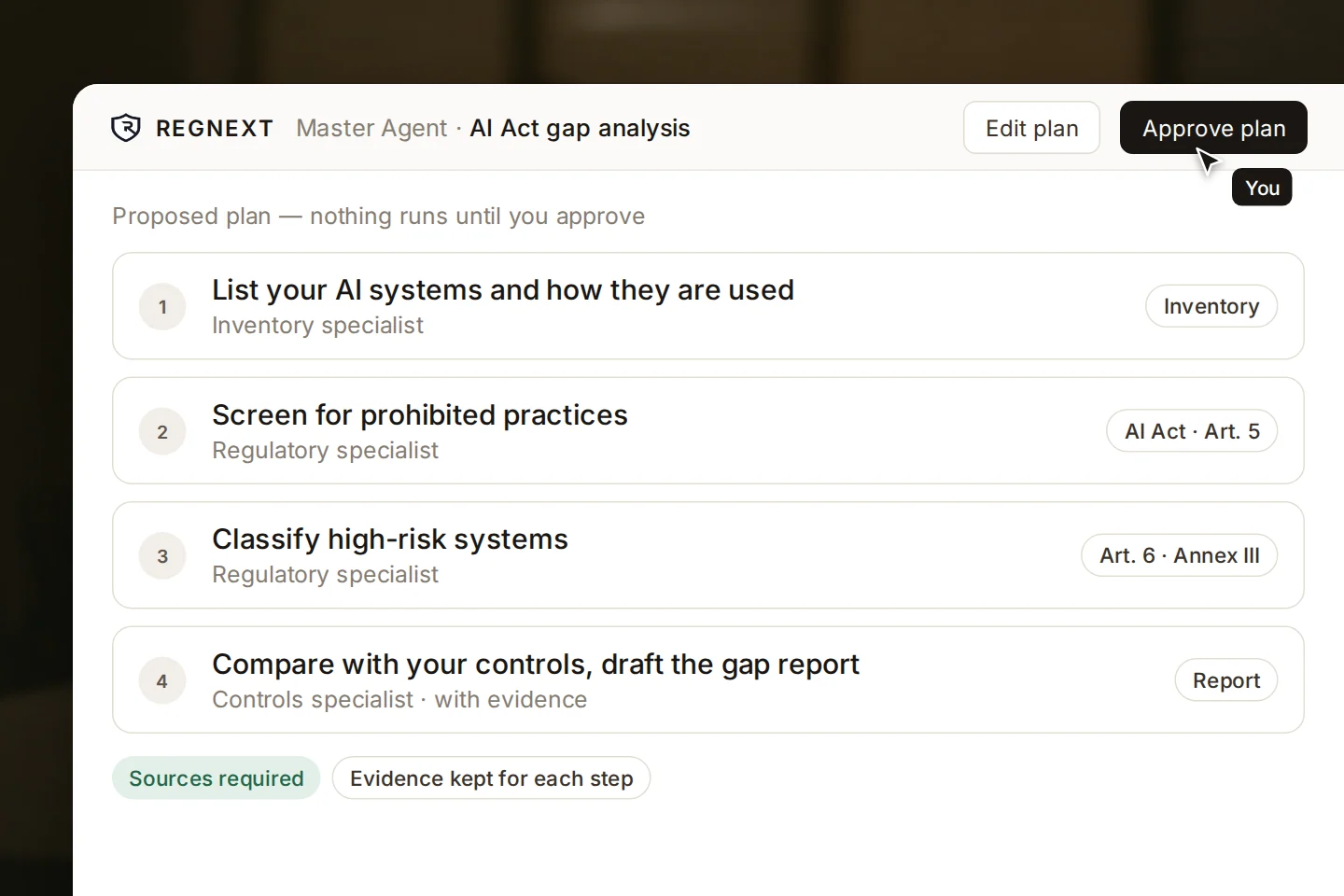
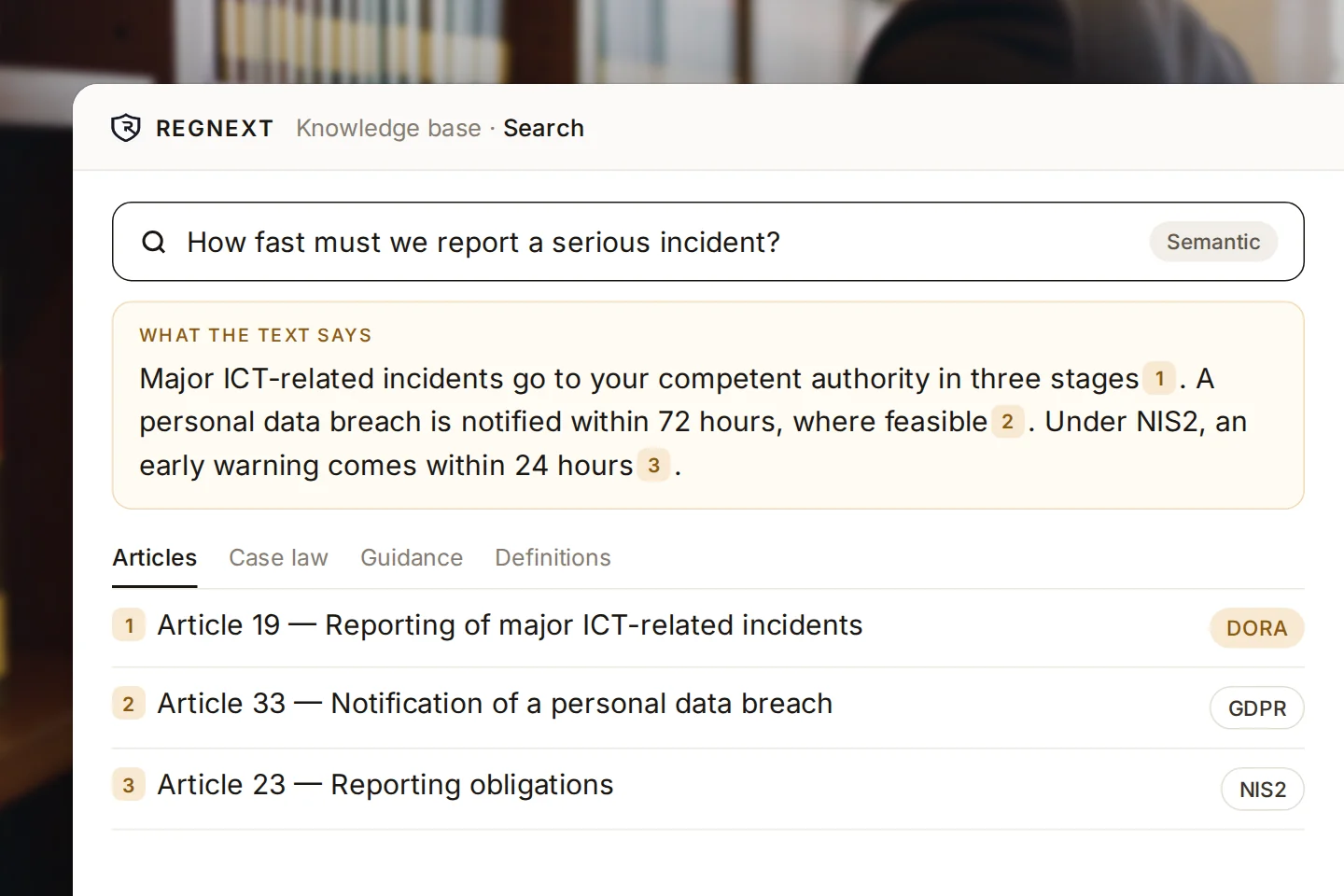
Binding regulatory provisions are systematically transformed into structured regulatory obligations, required actions, and control expectations. Each obligation is defined with explicit scope, conditions, and legal references, and retains full lineage to the originating legal text. This creates a governed regulatory knowledge base that supports compliance execution, regulatory change governance, and consistent interpretation across the organisation.
![[interface] screenshot of core features for an ai legal tech company](https://cdn.prod.website-files.com/6939e67cb72e0c490be966d7/695e8100aa7a65aa9dc164c4_f81d770836bc253aeb04a92a6cbc2542_capa3.jpg)
Regulatory obligations and actions are formalised into executable, versioned rules and parameterised control logic. Validation logic is context-aware and reporting-agnostic, enabling consistent execution across entities, periods, and regulatory frameworks. Rules remain stable even as reporting templates and taxonomies evolve, reducing long-term maintenance effort and ensuring determinism and reproducibility.
![[interface] screenshot of core features for an ai legal tech company](https://cdn.prod.website-files.com/6939e67cb72e0c490be966d7/695e966e98fc8abff72ffe0f_97a821ef2a8c8e4855fd0f998663b4b5_capa4.jpg)
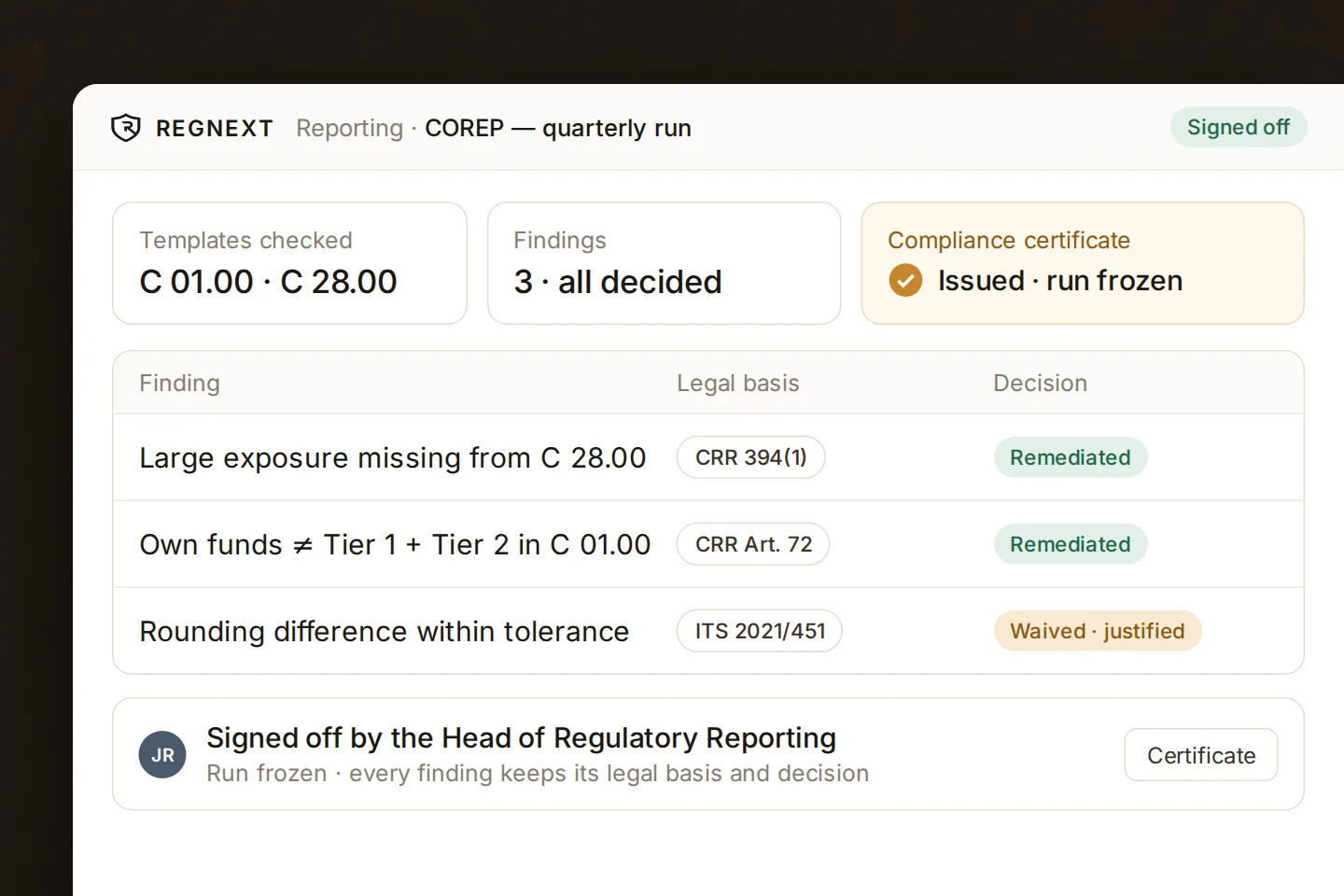
Client-provided data (e.g. JSON, files, APIs) is executed against governed rules to validate completeness, consistency, and regulatory alignment. Breaches and gaps are identified with explicit regulatory traceability, and compliance artefacts and evidence are generated as part of the execution process. This enables pre-filing validation and certification of reporting readiness before supervisory submission.
![[interface] screenshot of core features for an ai legal tech company](https://cdn.prod.website-files.com/6939e67cb72e0c490be966d7/695f9a452d1e63bcec690eca_capability5.jpg)
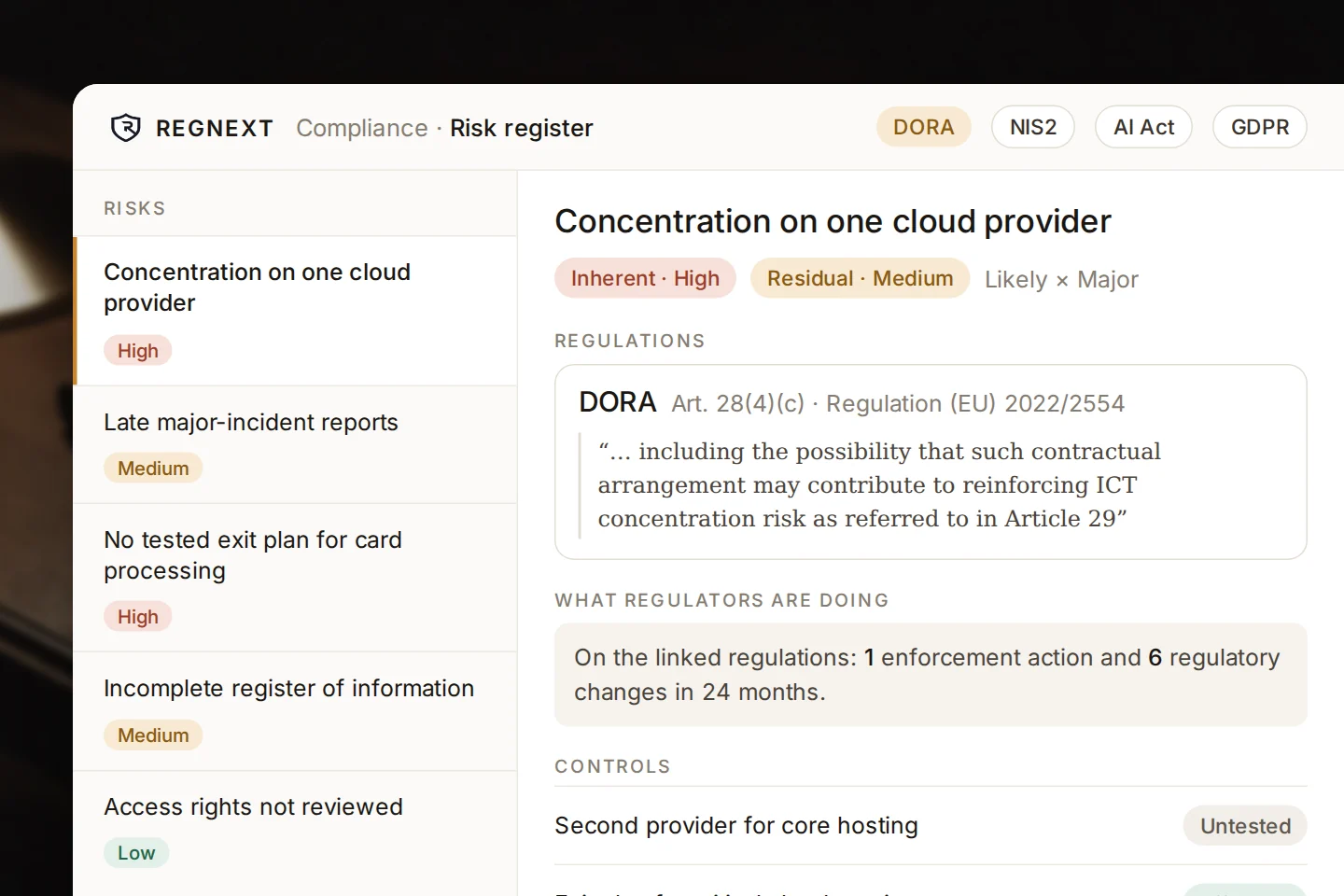
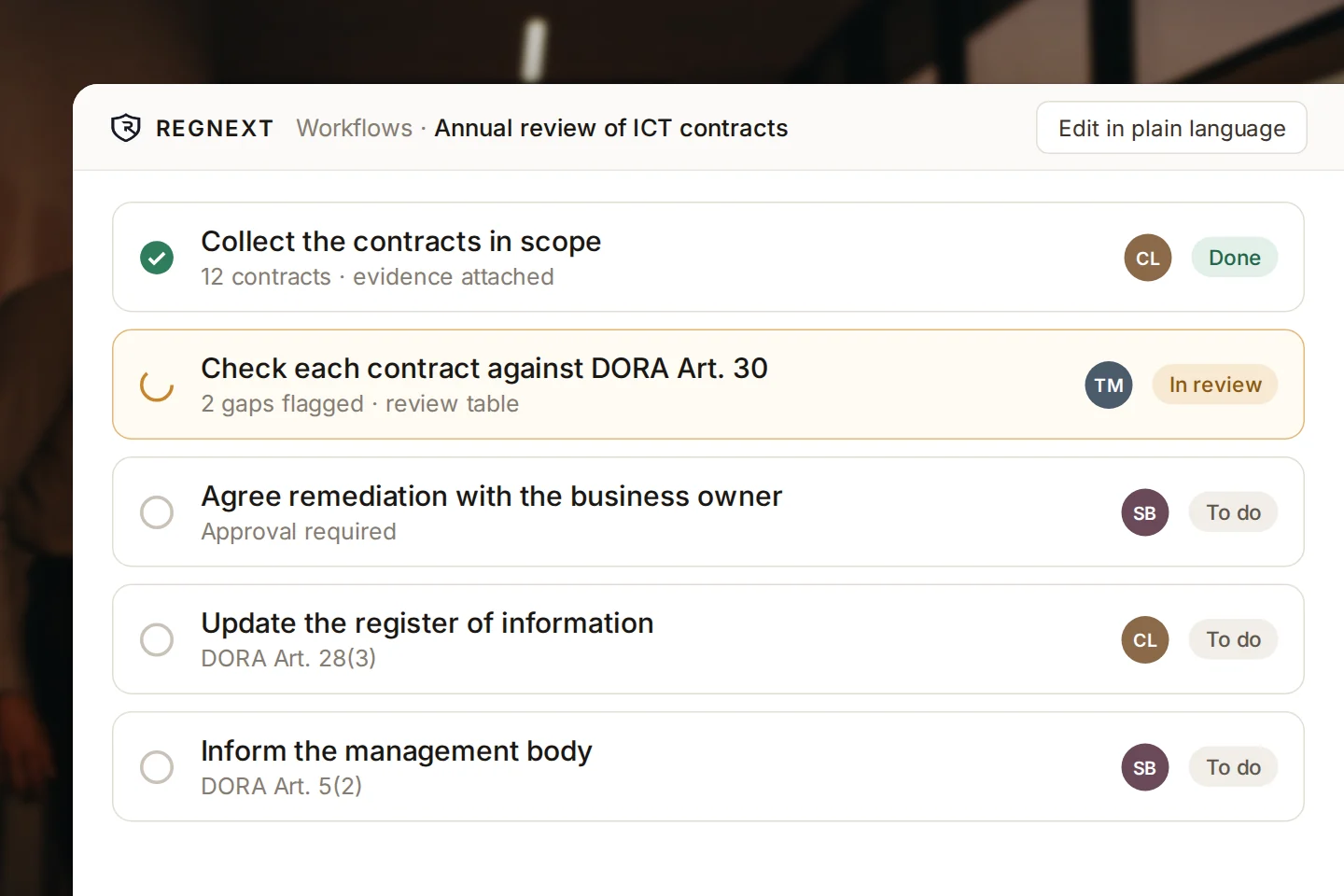
Regulatory changes are systematically mapped to affected obligations, actions, rules, controls, and reporting domains. Impact analysis highlights where remediation is required, while controlled versioning preserves historical reproducibility. This replaces episodic regulatory remediation programmes with continuous, auditable compliance maintenance embedded in day-to-day operations.

Explore how regulatory requirements are interpreted, structured, and executed across your compliance lifecycle—from change detection to audit-ready evidence.
Book demoClear, expert guidance on regulatory issues.
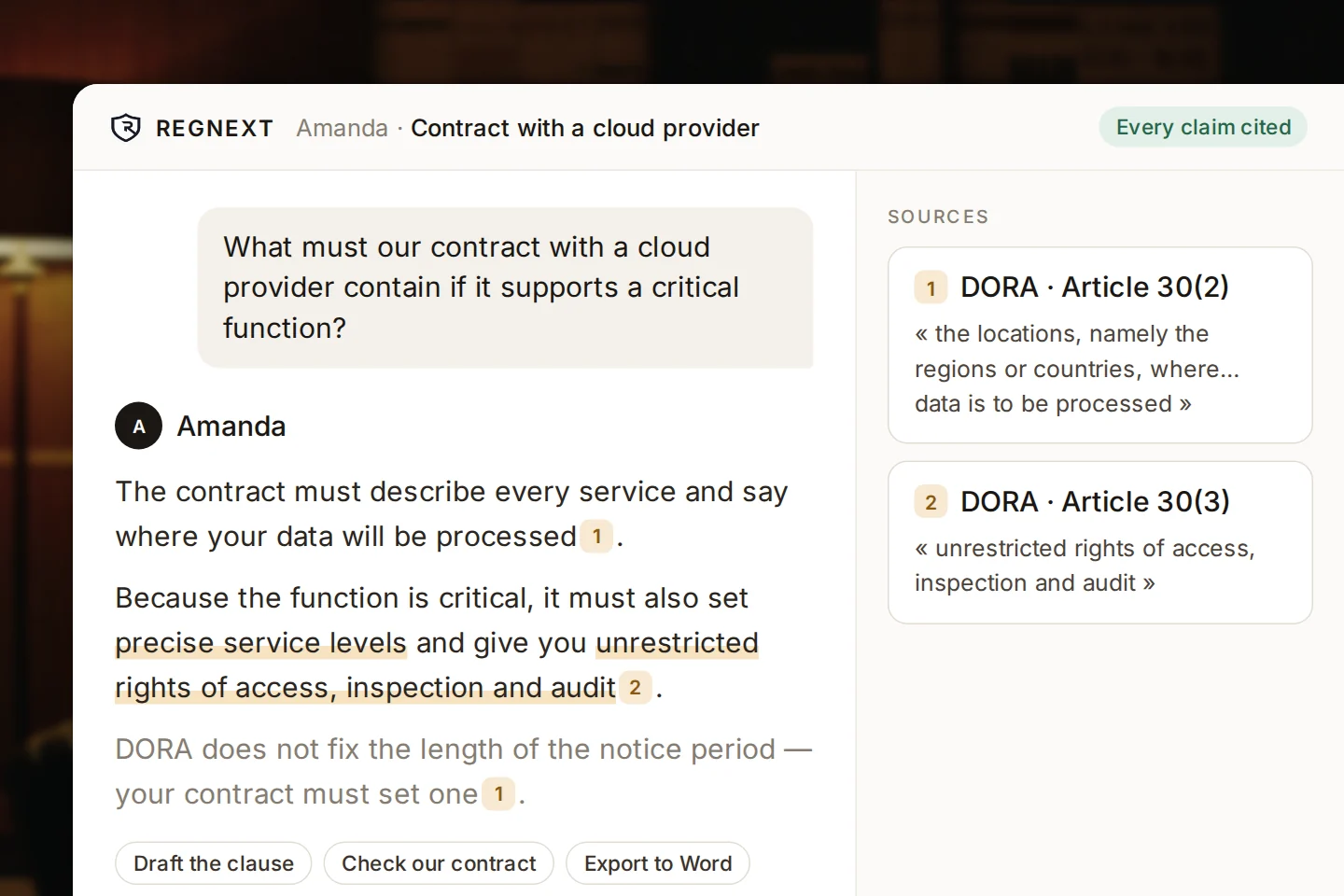
Binding regulatory texts are analysed to identify legally enforceable provisions only.
These are structured into obligations, required actions, and conditions, with full traceability back to the original legal source.
Continuous horizon scanning monitors official regulatory sources by jurisdiction.
New acts and amendments are detected as regulatory deltas, separating binding law from non-binding material.
Obligations are linked to actions, controls, and executable rules.
This supports regulatory change impact analysis, remediation planning, and ongoing compliance maintenance.
Yes. Client data (e.g. JSON, files, APIs) is validated before submission to check completeness, consistency, and regulatory alignment, enabling pre-filing certification and reducing post-submission findings.
For enterprise inquiries or support, connect with our team. We respond promptly.