OBLIGATION EXTRACTION & STRUCTURING

Turn regulation into actionable obligations.
Transform complex regulatory text into clear, structured, and operational compliance requirements.
Designed for
Complex and evolving regulatory frameworks

Obligation Extraction & Structuring

Transform regulatory text into structured, actionable obligations
Regulatory texts are written for legal precision, not operational clarity. They are lengthy, nuanced, and often inconsistent across jurisdictions, making it difficult for organisations to identify what is actually required of them. Manual interpretation is slow, difficult to scale, and prone to inconsistency across teams and regions.RegNext’s Obligation Extraction & Structuring capability converts unstructured regulatory and supervisory text into clear, structured, and traceable regulatory obligations. It provides a disciplined foundation for consistent regulatory interpretation, downstream analysis, and compliance execution.

The challenge with regulatory text

Most organisations struggle to operationalise regulation because:
- Obligations are embedded in complex legal language
- Requirements are scattered across articles, annexes, and recitals
- Similar obligations are expressed differently across jurisdictions
- Manual extraction introduces interpretation drift over time
- Obligations are rarely stored in a structured, reusable format
As a result, regulatory requirements remain locked in documents, limiting transparency, reuse, and auditability.
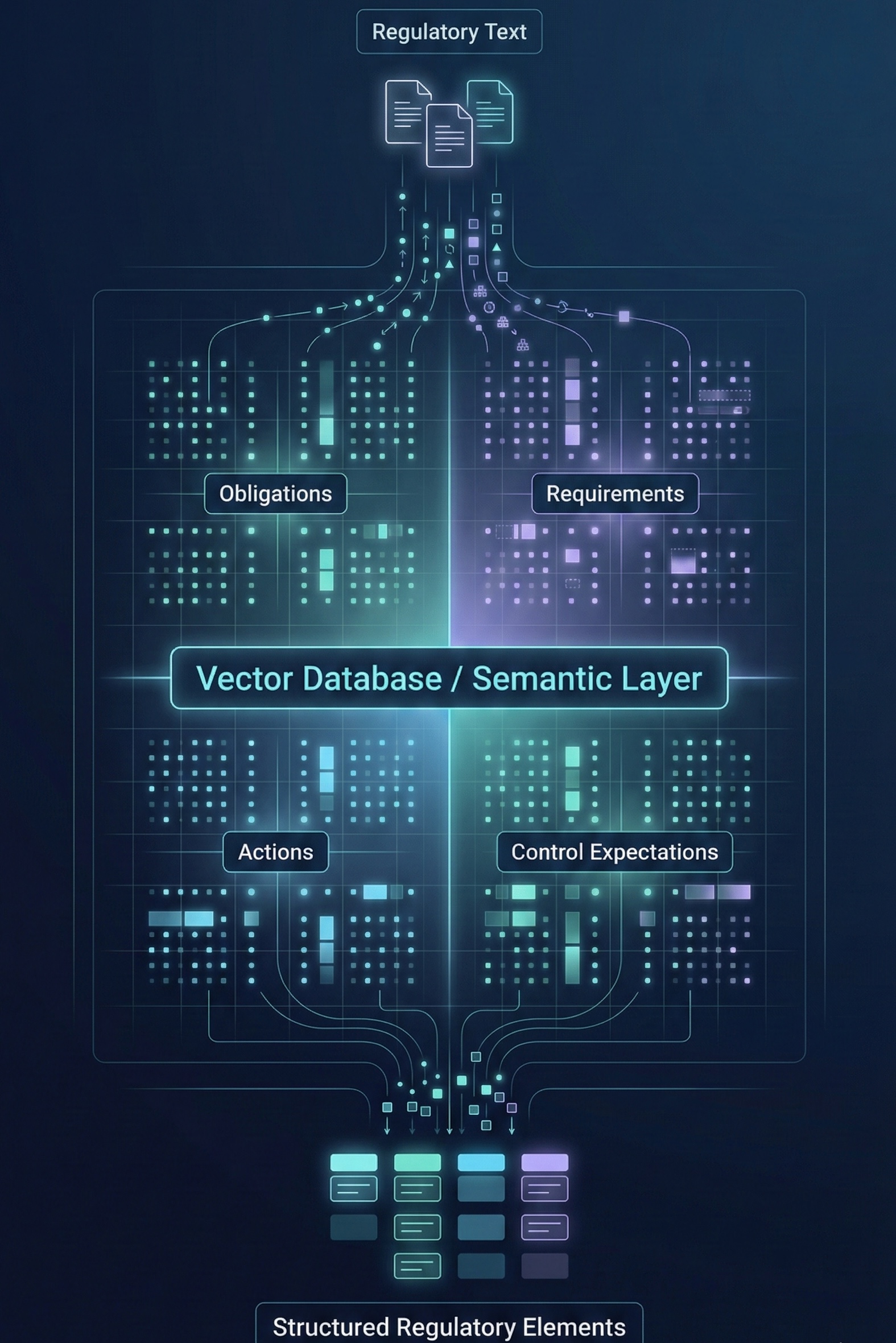

How RegNext Obligation Extraction Works


Source-Anchored Interpretation

‍RegNext processes regulatory and supervisory texts directly from authoritative sources. Each extracted obligation remains explicitly linked to its originating regulation, article, and context, preserving legal fidelity at all times.

Structured Obligation Modelling

Regulatory requirements are decomposed into structured obligation records, capturing elements such as scope, applicability, conditions, timelines, and references. This transforms free-form legal text into machine-readable regulatory intelligence.

Normalization Across Frameworks

Obligations are normalised into a consistent internal model, enabling comparison and reuse across regulations, jurisdictions, and regulatory frameworks. This avoids fragmentation and supports cross-regulatory analysis.

Deterministic Validation

All extracted obligations pass through mandatory validation gates to ensure legal correctness, scope integrity, and structural consistency before being used in downstream processes.

What You Gain

Clarity and Consistency

‍Move from subjective interpretation to a consistent, organisation-wide understanding of regulatory requirements.

‍Scalable Regulatory Coverage

‍Structure obligations once and reuse them across business units, jurisdictions, and regulatory initiatives without re-interpreting source text.

‍Traceability to Legal Source

Every obligation is explicitly anchored to its legal origin, supporting auditability and defensible regulatory positions.

Faster Downstream Execution

‍Structured obligations can be directly consumed by impact analysis, workflow execution, reporting, and evidence generation.

Where Semantic Intelligence Adds Value

Compliance & Regulatory Teams:

Maintain a clear, structured inventory of regulatory requirements.

‍Legal Functions:

Preserve legal fidelity while enabling operational use.

‍Risk & Control Owners:

Understand obligations in an actionable, structured format.

‍Audit & Assurance:

Trace requirements back to authoritative sources with confidence.
image of brainstorming session for a productivity tools business

Transform compliance.
Accelerate outcomes.

Explore how RegNext supports regulatory intelligence and compliance execution in your industry.