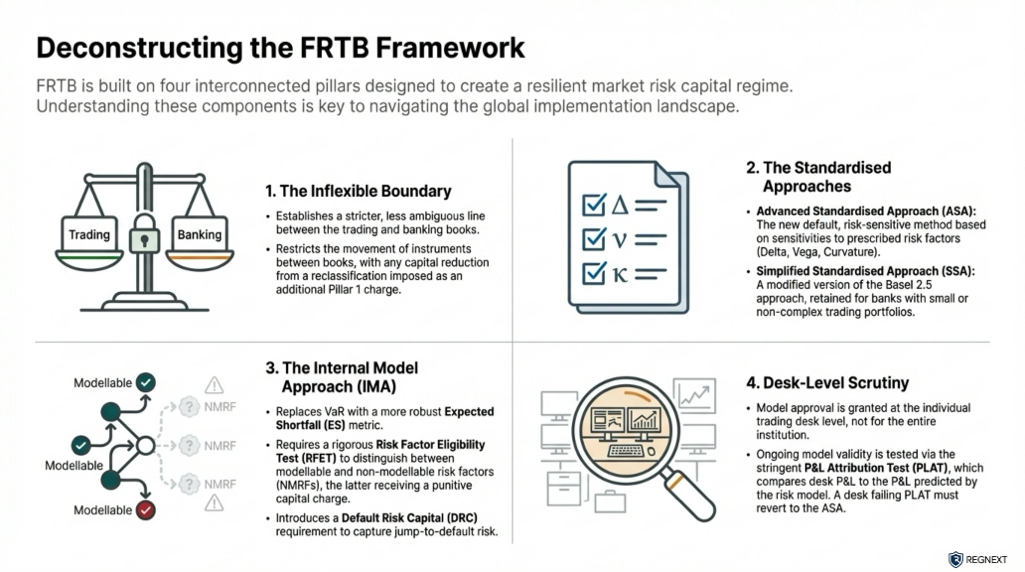
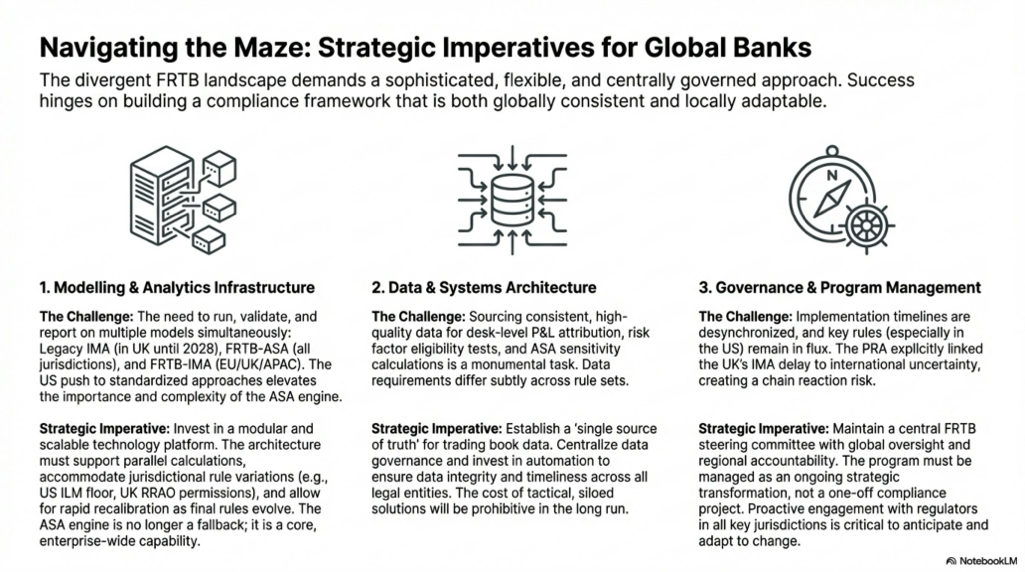
The coordinated global rollout of the Fundamental Review of the Trading Book (FRTB) has officially splintered.

Based on the new sources provided, here is the reviewed and updated executive summary.

Key Updates Incorporated:

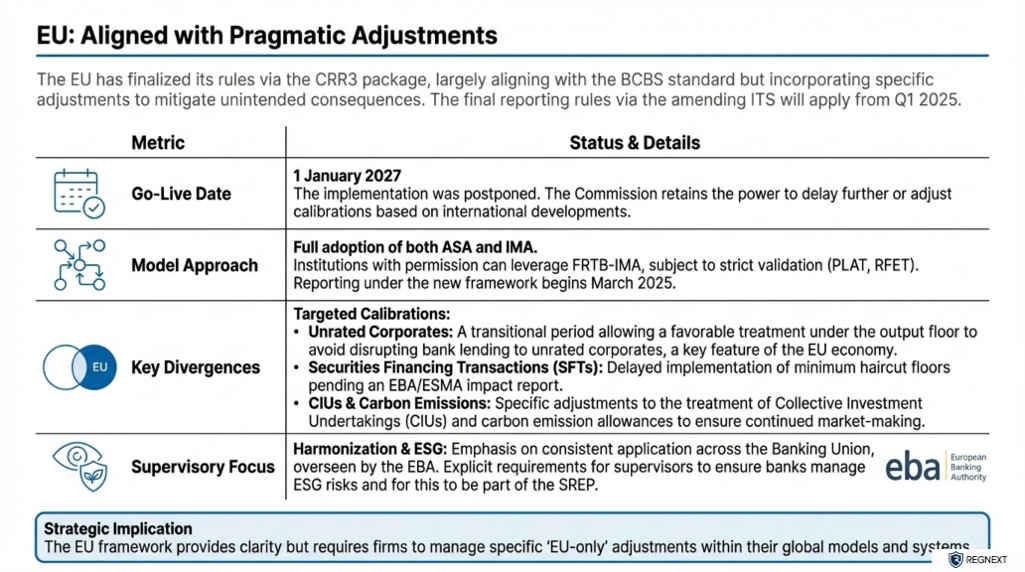
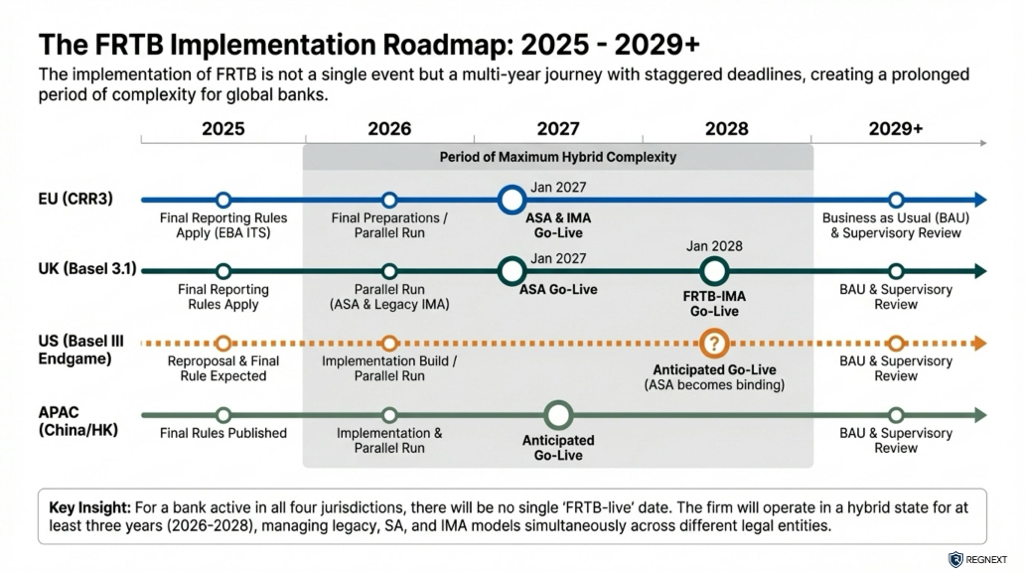
  • EU Delay Confirmed: The European Union has officially postponed the market risk capital requirements to 1 January 2027 (previously listed as 2026 in the initial summary) to align with global timelines and preserve competitiveness.
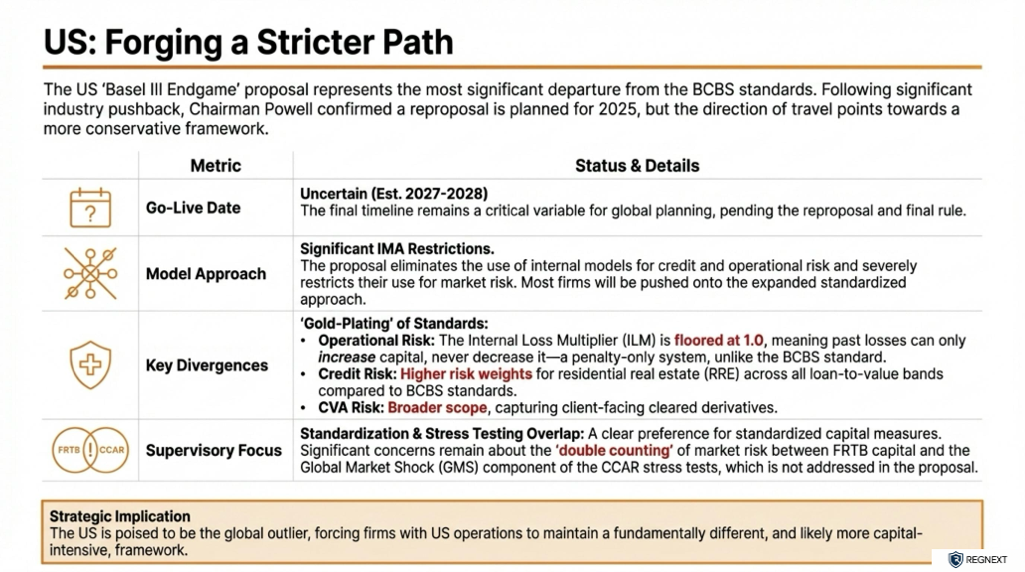
  • US Reproposal: The United States’ implementation faces significant delays, with Federal Reserve Chair Jerome Powell confirming in 2025 an intention to re-propose the "Basel III Endgame" rules, pushing the timeline further into uncertainty.
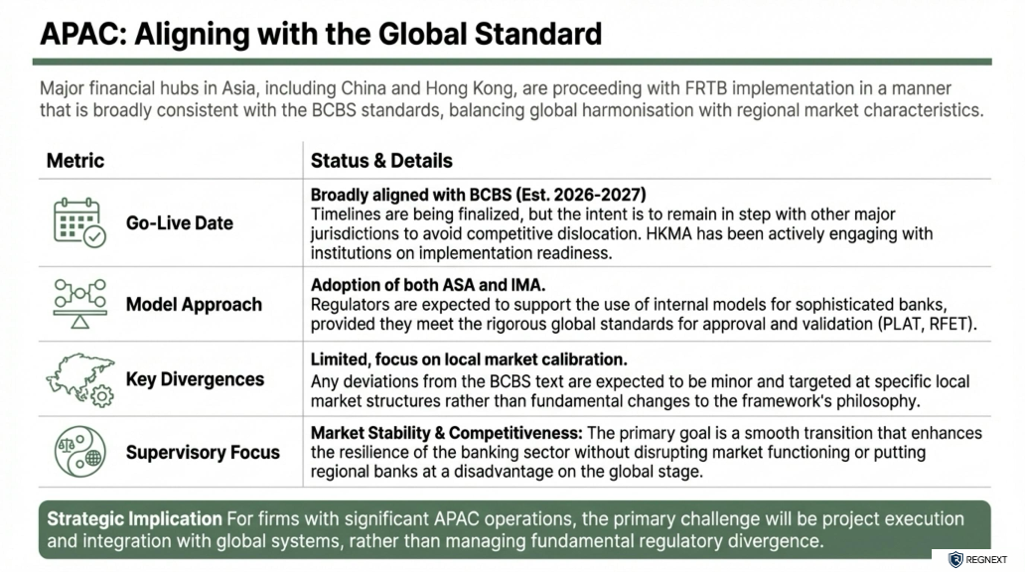
  • Hong Kong Certainty: Hong Kong proceeds with its 1 January 2025 effective date.

Executive Summary: The Widening Global Fracture in FRTB Implementation

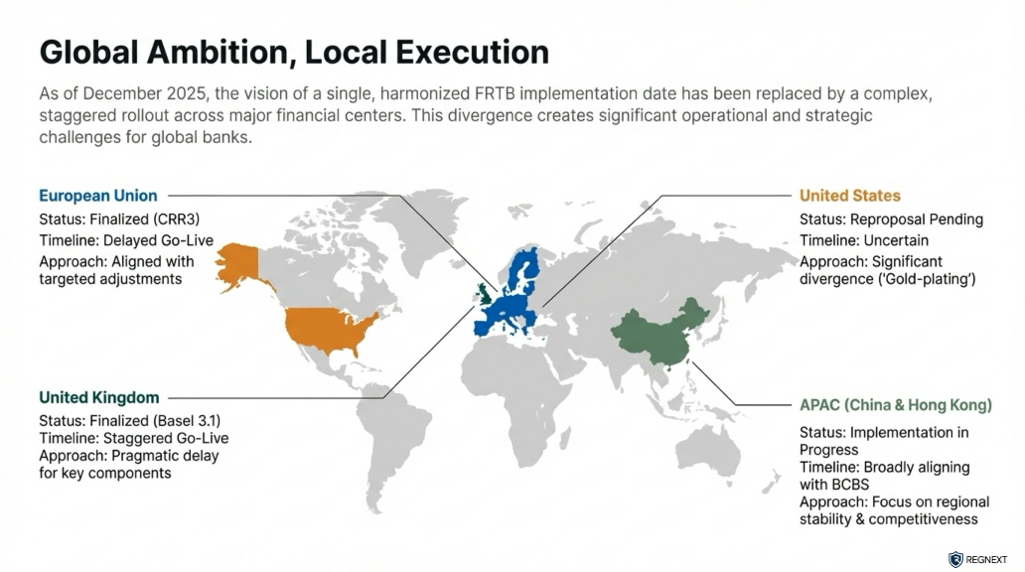
The implementation of the Fundamental Review of the Trading Book (FRTB) has shifted from a coordinated global rollout to a fragmented timeline. While Hong Kong has proceeded with a 1 January 2025 implementation, Western jurisdictions have significantly delayed enforcement to protect domestic banking competitiveness.

In a major development, the European Commission adopted a Delegated Regulation on 12 June 2025, postponing the application of the market risk capital requirements by one year to 1 January 2027. This decision explicitly cites the need to preserve a "international level playing field" given the uncertainty surrounding U.S. implementation. Meanwhile, the United States has signaled a restart of its rulemaking process; Federal Reserve Chair Jerome Powell indicated in early 2025 that the "Basel III Endgame" will be re-proposed, leaving the U.S. compliance date indefinite.

Implementation Timelines by Jurisdiction

  • Hong Kong (HK): The Hong Kong Monetary Authority (HKMA) issued the necessary Supervisory Policy Manuals (MR-1 and MR-2) in March 2024 to support the 1 January 2025 effective date.
  • European Union (EU): To avoid disadvantaging EU banks while the U.S. delays, the European Commission officially postponed the market risk framework's application date from 2026 to 1 January 2027.
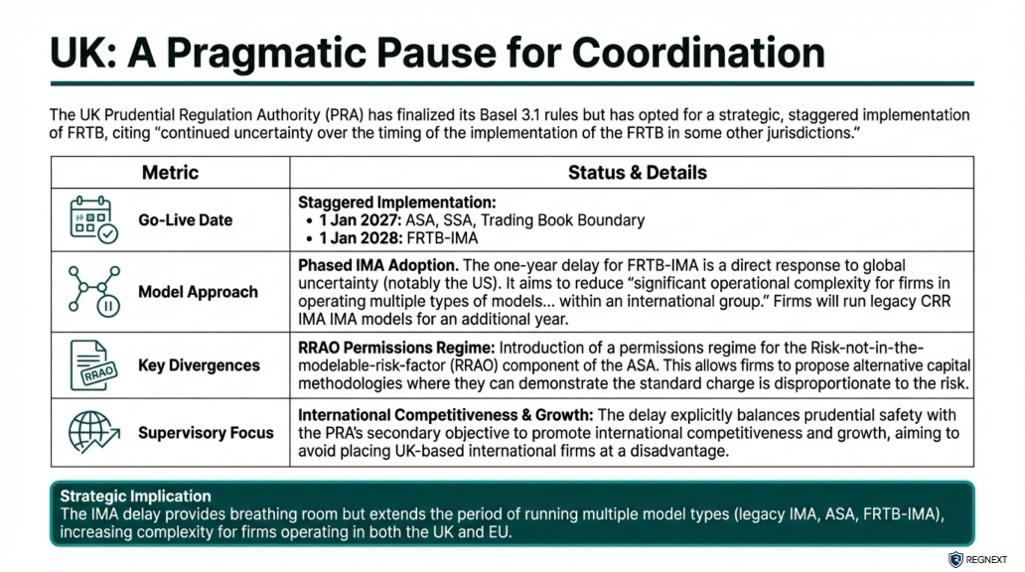
  • United Kingdom (UK): The Bank of England continues to consult on adjustments to the market risk framework (CP17/25) as of July 2025. The UK is maintaining a staggered approach, aiming for 1 January 2027 for the Standardised Approach, with the Internal Models Approach (IMA) following on 1 January 2028 to allow for smooth cross-border model transitions.
  • United States (US): The timeline is currently indefinite. Following intense industry pushback on the July 2023 proposal, regulators have indicated that the rules will be re-proposed, delaying implementation well beyond the original targets,.

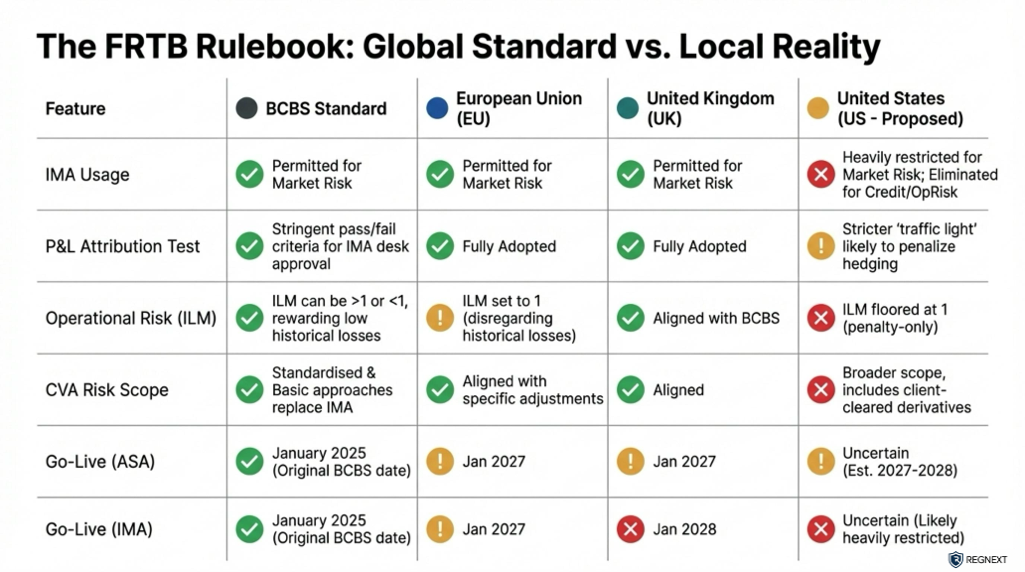
Side-by-Side Comparison of FRTB Implementation

Feature European Union (EU) United Kingdom (UK) United States (US) Hong Kong (HK)
Go-Live Date 1 Jan 2027 1 Jan 2027 (SA)
1 Jan 2028 (IMA)
Indefinite (Reproposal Pending) 1 Jan 2025
Status Final rules adopted; implementation delayed to align with global timelines. Consultation active (CP17/25); staggered approach adopted. Proposal being reworked/re-proposed due to industry pushback. Implemented / Live.
Internal Models (IMA) Allowed subject to permission; P&L attribution tests apply. Allowed; implementation delayed to 2028 to ease transition. Restricted: Original proposal limited credit risk internal models; reproposal terms TBD. Allowed subject to HKMA approval.
Reporting Reporting requirements active under CRR II. Data collection exercises ongoing. No active regulatory reporting of final metrics. Pre-live reporting active.

Key Divergences

1. The U.S. "Gold-Plating" and ReproposalThe U.S. divergence has deepened. The original 2023 proposal was criticized for "gold-plating" (exceeding) international standards, such as prohibiting internal models for credit risk and imposing higher risk weights on residential mortgages (up to 20 percentage points higher than Basel III),. With the confirmed reproposal of these rules, the U.S. is currently the furthest behind in the implementation cycle.

2. Strategic Delays in Europe (EU & UK)Both the EU and UK have effectively decoupled their timelines from the original Basel schedule to wait for the U.S. The EU's delay to 2027 is a direct response to the U.S. delays, ensuring EU banks are not subject to higher capital requirements for trading activities before their American competitors.

3. Operational Risk & Internal Loss Multiplier (ILM)A major technical divergence involves the Internal Loss Multiplier (ILM) for operational risk. The EU has exercised discretion to set the ILM to 1, effectively neutralising the impact of historical operational losses on capital requirements. The U.S. proposal, conversely, set a minimum ILM of 1, meaning U.S. banks with historical losses would face strictly higher capital charges.

4. Treatment of Structural FXThe EU is finalizing specific technical standards (RTS) for "Structural FX" positions to allow banks to exclude certain foreign exchange positions from capital requirements if they are taken to hedge capital ratios. This specific relief is being heavily standardized in the EU to ensure a level playing field, whereas other jurisdictions may treat these hedges differently under national discretions.
No items found.
December 14, 2025