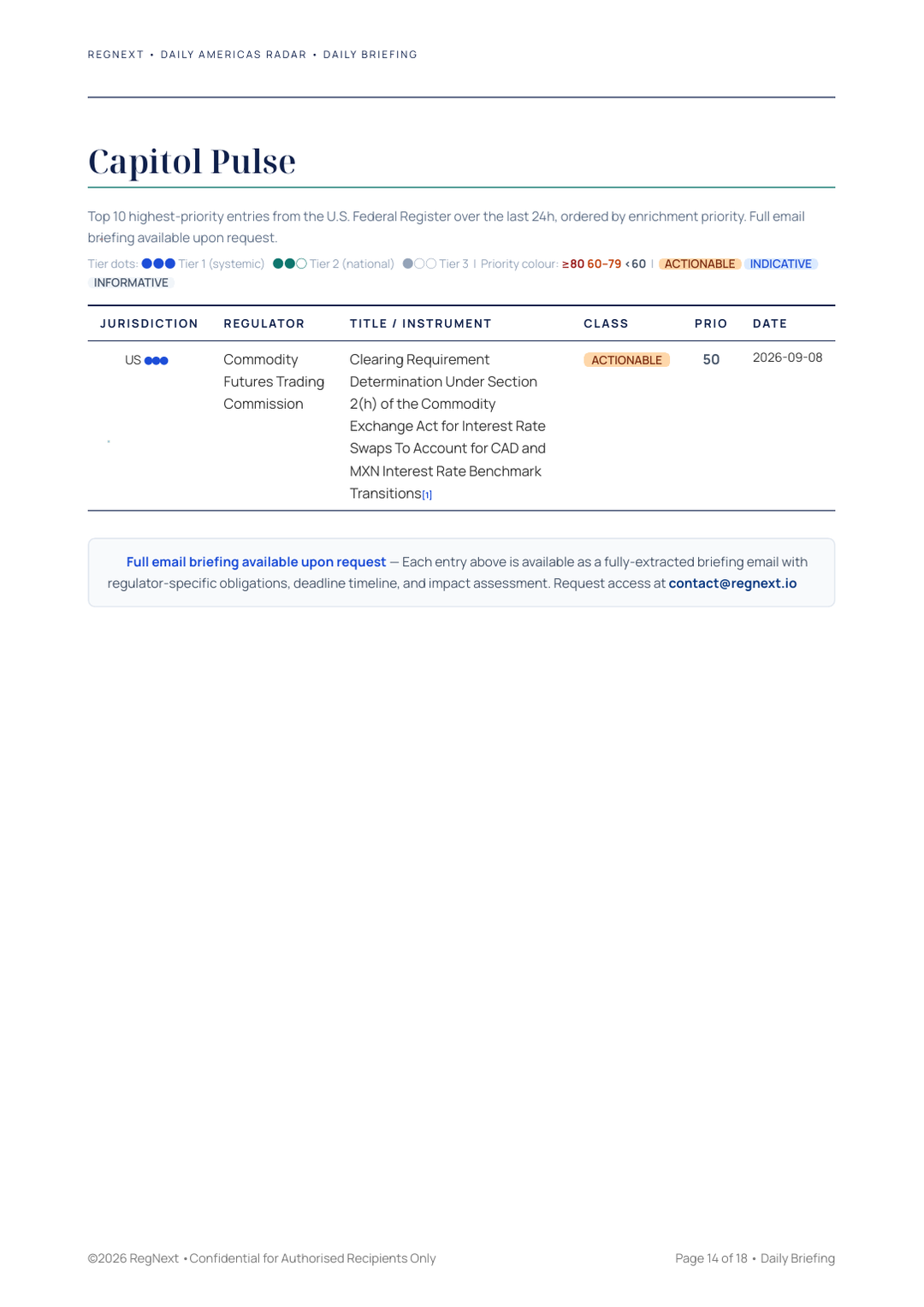
The Federal Trade Commission just took action against payment processor Humboldt Merchant Services for knowingly facilitating sham merchants. Here's what it means for financial compliance officers and high-risk merchant service providers.
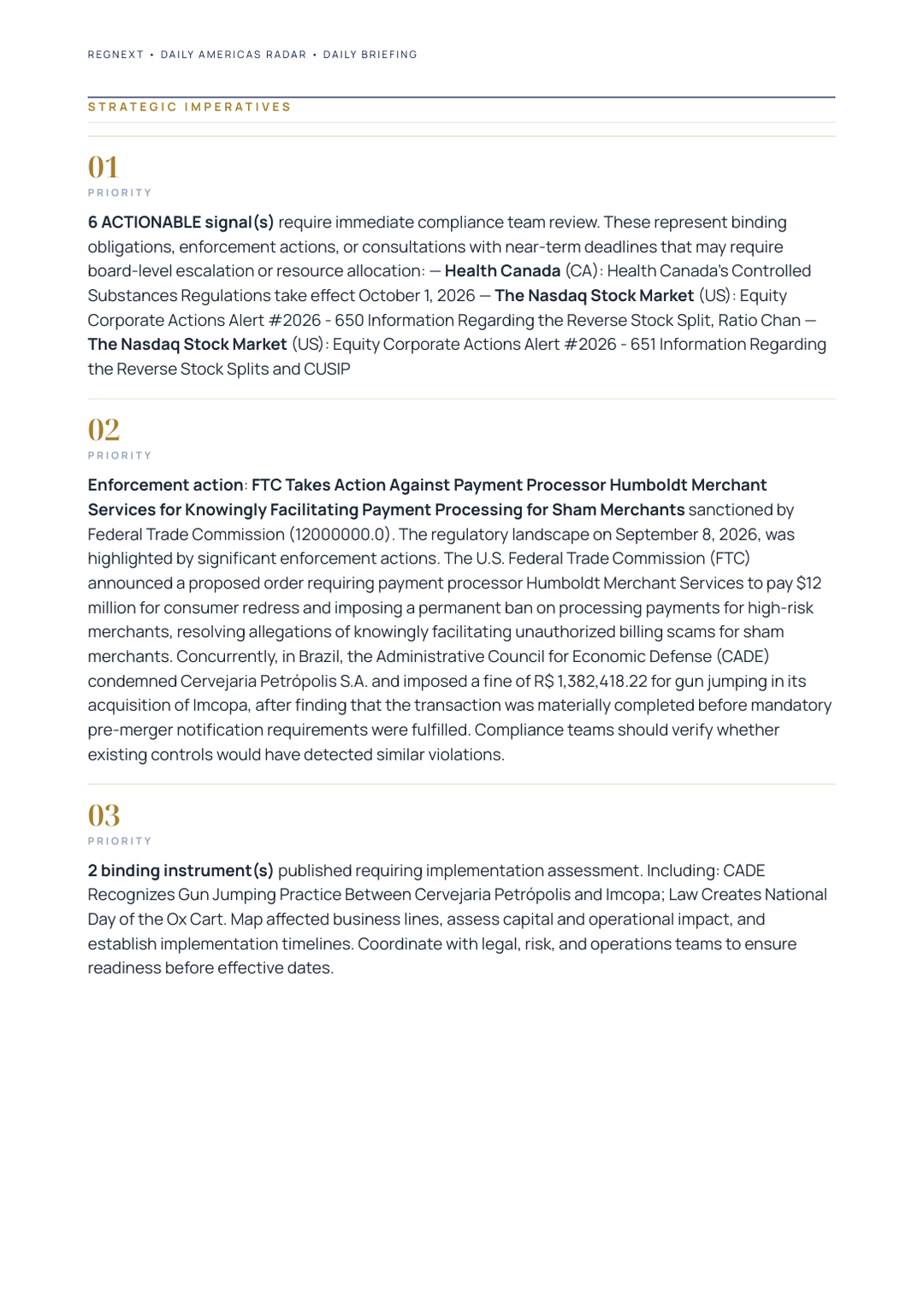
1️⃣ FTC — Action Against Humboldt Merchant Services
The federal agency filed a proposed federal court order targeting the processor for knowingly processing payment transactions for sham merchants.
This regulatory move directly hits merchant acquirers, payment processors, and compliance staff in retail billing.
Affected financial firms must use strict merchant screening and transaction tracking systems to identify and stop fraud.
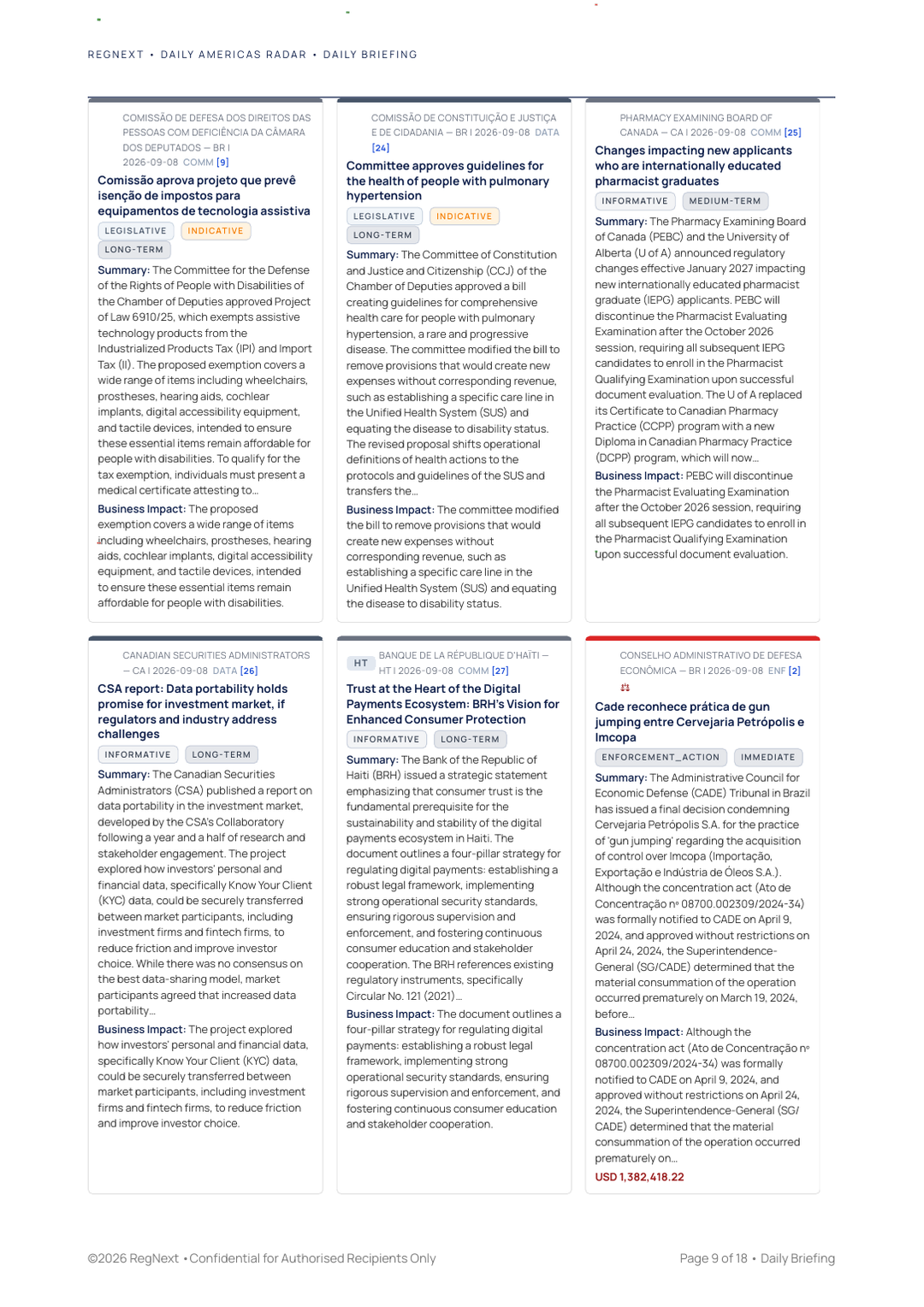
2️⃣ CADE — Gun Jumping Recognized in Brazil Merger
The antitrust regulator officially recognized the practice of gun jumping in a transaction between Cervejaria Petrópolis and Imcopa.
This major administrative decision impacts corporate legal departments, merger parties, and antitrust lawyers operating in Brazil.
Merging business companies must avoid premature operational integration and wait for final regulatory clearance to combine operations.
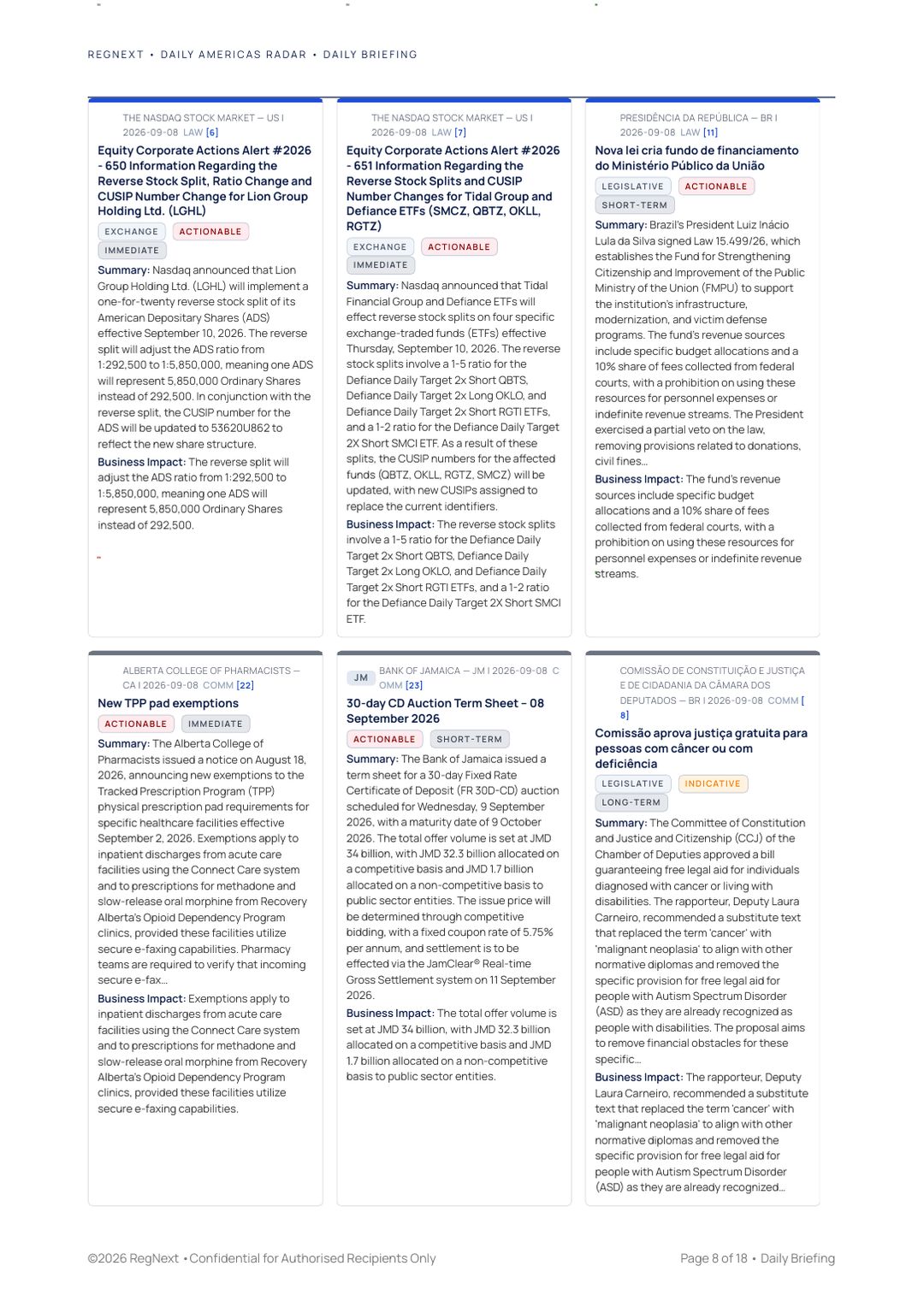
3️⃣ Health Canada — New Controlled Substances Rules
The Canadian health authority issued a notice that its new rules for controlled drugs take effect October first.
This critical update directly hits licensed pharmaceutical dealers, medical research clinics, lab staff, and drug distributors.
In-scope pharmaceutical organizations must update internal compliance guidelines, physical storage rules, and tracking tools to comply.
4️⃣ CCJC — Free Legal Aid Approved in Brazil
The legislative committee approved a social welfare bill designed to guarantee free legal assistance for citizens with cancer or disabilities.
This social measure directly hits public defenders, community legal aid clinics, court staff, and civil rights advocates.
The draft law will now proceed to further legislative reviews and votes before its final enactment.
5️⃣ CPD — Assistive Technology Tax Cuts Approved
The house commission approved a new draft project to establish tax exemptions for imports of assistive tech devices.
This fiscal incentive directly hits retail importers, medical device manufacturers, tax compliance staff, and disabled consumers.
The legislative proposal must now pass subsequent reviews by legal, financial, and other congressional committees.
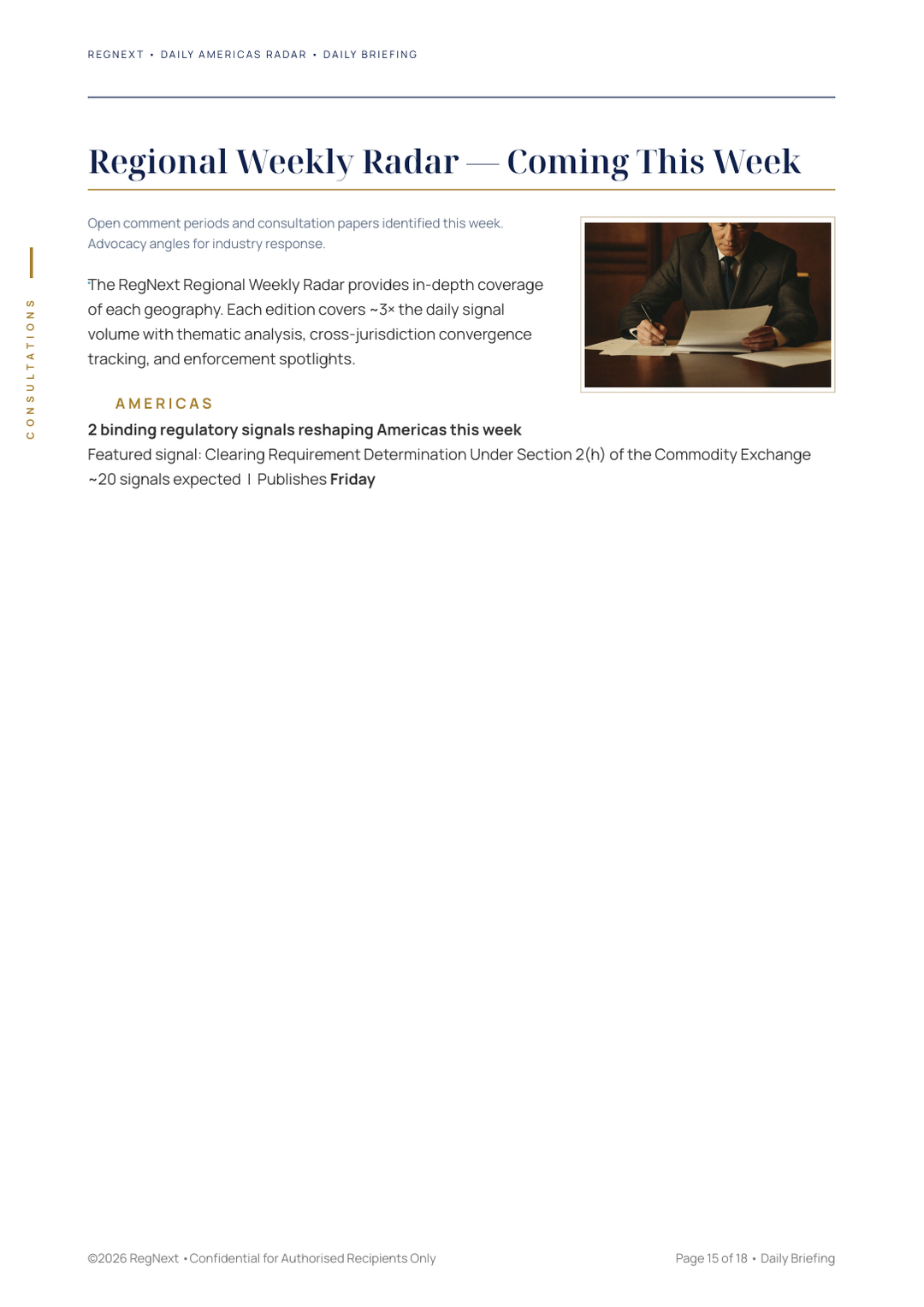
Full analysis in the attached RegNext Daily Americas Radar carousel.
— Elena Navarro · Managing Editor, RegNext
Daily Americas Radar · Tuesday 08 Sep 2026
#USRegulation #LATAMRegulation #FinancialRegulation #ComplianceIntelligence