RegNext | Daily Middle East & Africa Radar | EOD Briefing | Monday 08 Jun 2026
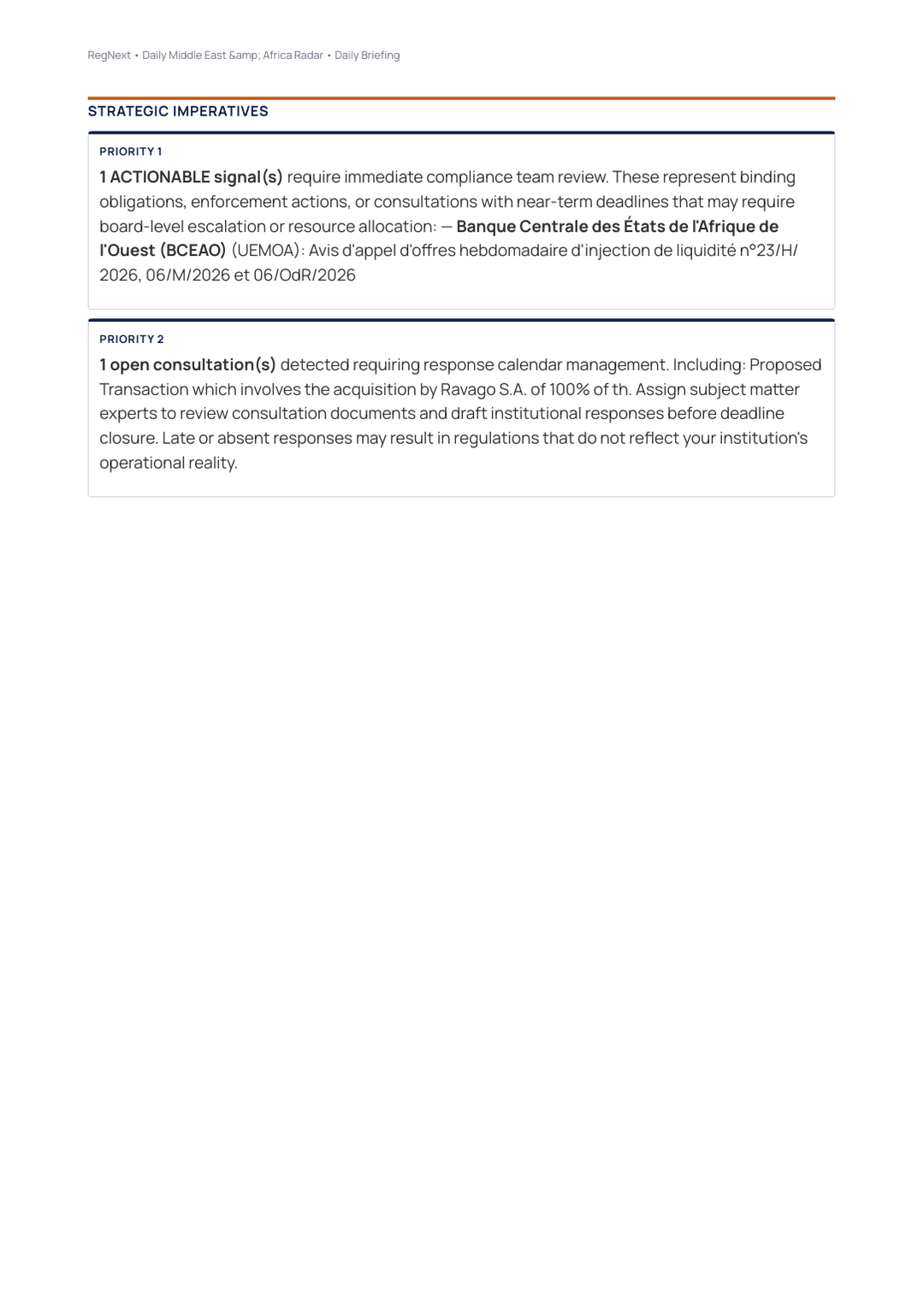
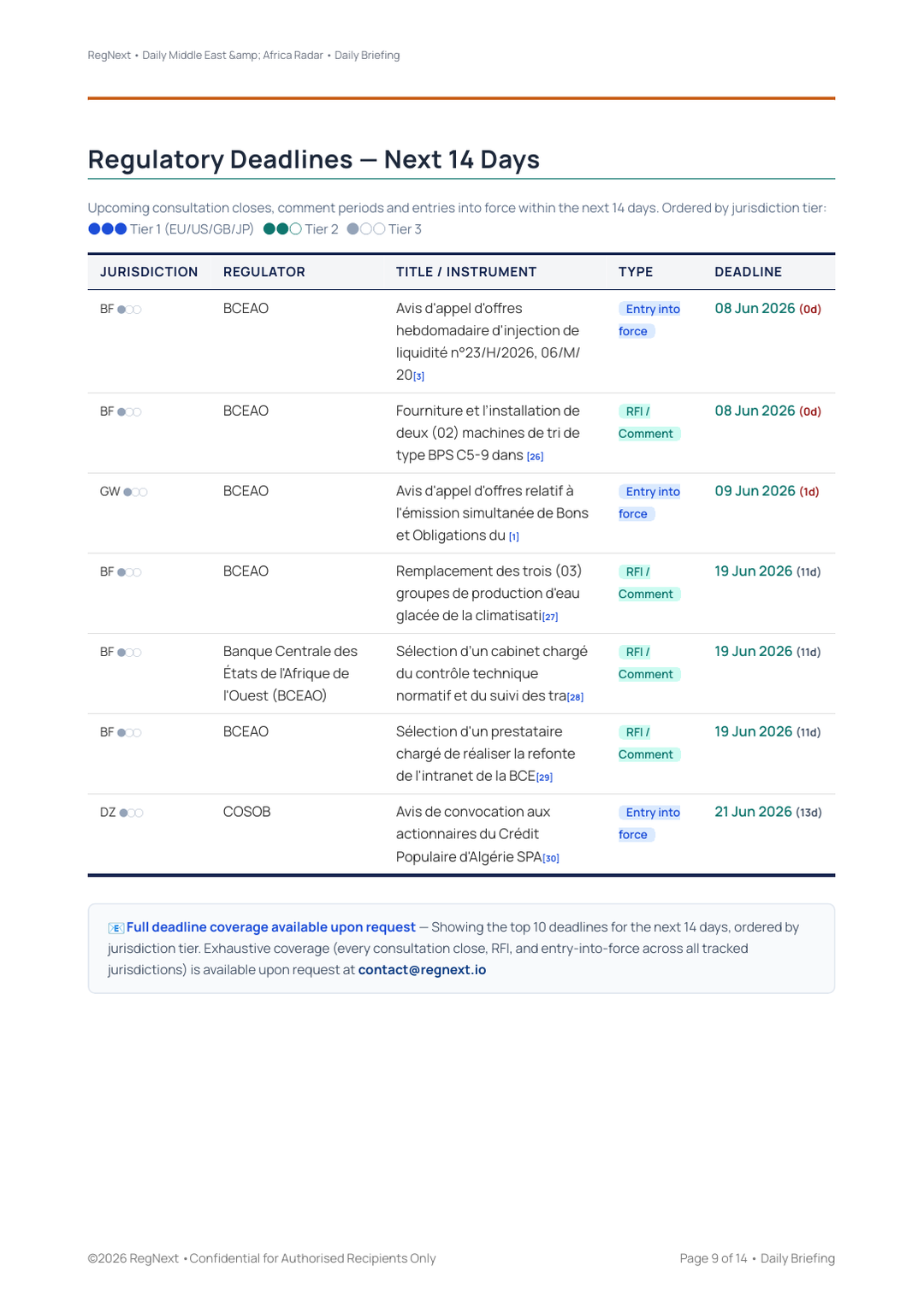
BCEAO just initiated its weekly liquidity injection tender. Here's what it means for the UEMOA banking sector.
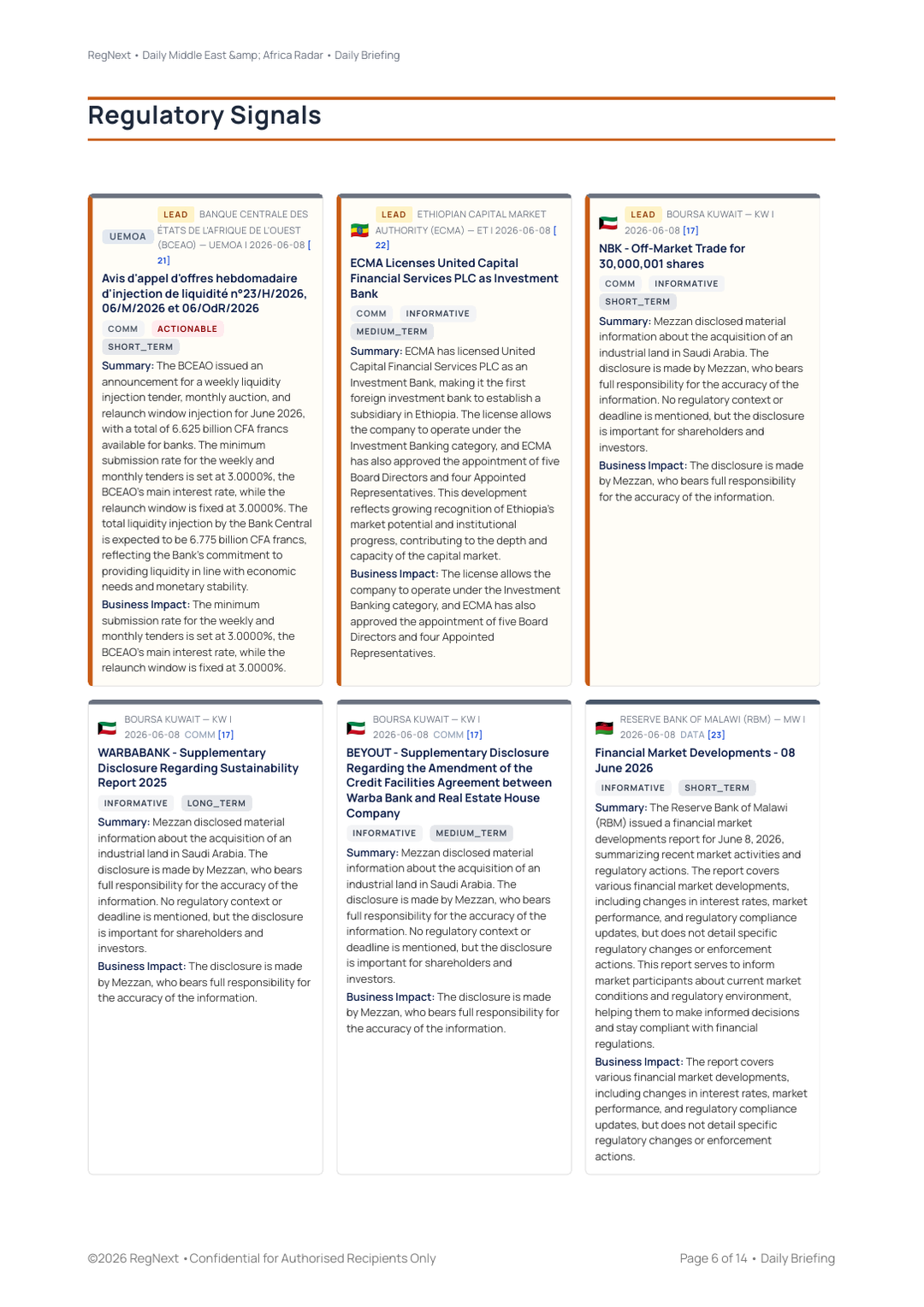
1️⃣ [#1] Banque Centrale des États de l'Afrique de l'Ouest — Weekly liquidity injection tender
The central bank launched a series of tenders to manage regional liquidity across multiple facilities
All participating commercial banks within the UEMOA zone
Banks must submit their bids according to the specified tender numbers for monetary policy alignment
2️⃣ [#2] Ethiopian Capital Market Authority — Licensing of United Capital Financial Services PLC
ECMA granted an investment banking license to United Capital Financial Services PLC
Investment banking stakeholders and regional capital market participants
The new licensee will begin operations under the supervision of the Ethiopian capital markets framework
3️⃣ [#6] Reserve Bank of Malawi — Financial Market Developments report
The RBM released its latest update on interest rates and regulatory compliance performance
Commercial banks and domestic institutional investors in Malawi
Market participants are expected to adjust their compliance strategies based on the reported interest rate fluctuations
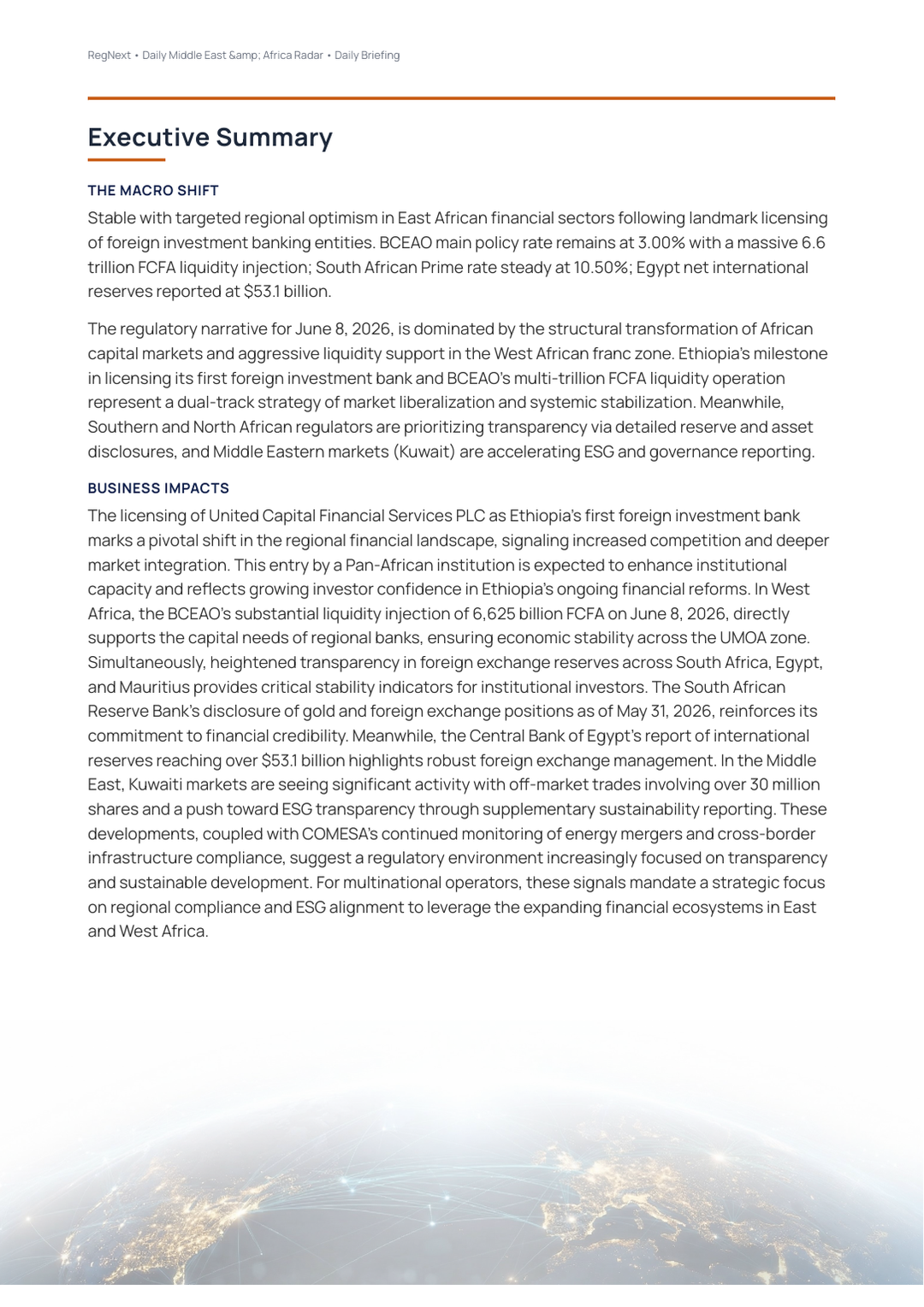
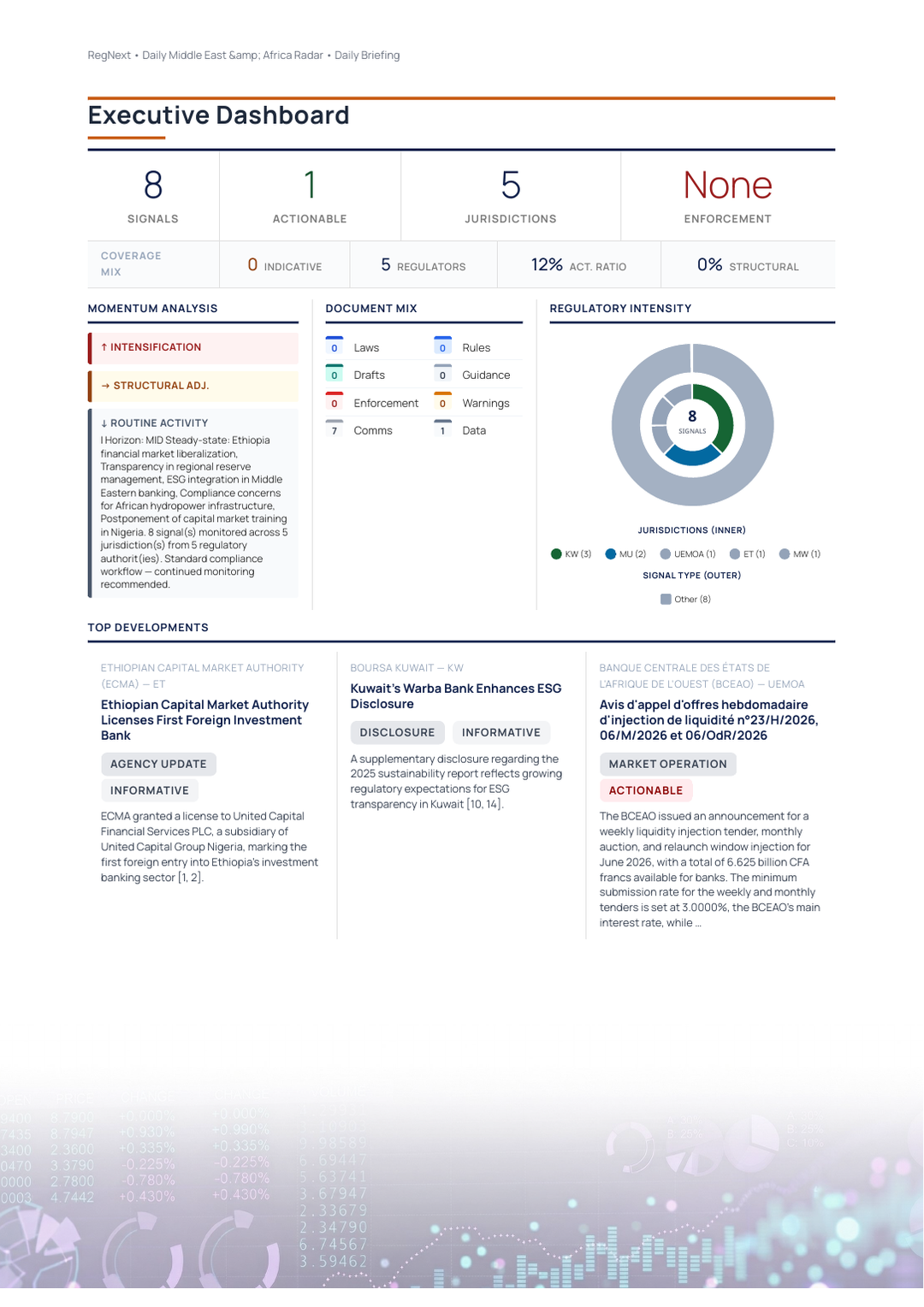
The current regulatory activity highlights a significant emphasis on structural maturity and transparency across African and Middle Eastern markets. In West Africa, the BCEAO’s consistent use of liquidity injection tenders reflects a proactive stance on monetary policy to support the banking sector's operational needs and maintain regional economic stability. Simultaneously, the licensing of new investment banks in Ethiopia by the ECMA demonstrates a clear commitment to building a robust capital market infrastructure. This move is likely to stimulate increased competition and provide more sophisticated financial services within the Ethiopian economy as it opens up to wider investment.
Further north, Boursa Kuwait continues to set the pace for market transparency with a flurry of disclosures that impact multiple sectors. The supplementary reporting on sustainability by Warba Bank indicates that ESG considerations are moving from peripheral concerns to central reporting requirements for financial institutions in the Gulf. Additionally, the detailed reporting on credit facility amendments and large-scale off-market trades ensures that all market participants have equal access to material information. Meanwhile, the Bank of Mauritius provides critical economic indicators through tourism earnings data and secondary market transaction reports for the week ended June 5th. These data points are essential for liquidity management and national economic planning. Together, these signals point toward a period of intensive reporting and regulatory refinement aimed at strengthening regional financial systems and fostering long-term economic resilience across the continent.
Full analysis in today's RegNext Daily Middle East & Africa Radar.