Encyclopedia · Legal
The Encyclopedia lays the law out code by code, from titles down to articles. Each entry shows what the text says, the rules it sets, the decisions that apply it — with the arguments the courts accepted or rejected — and where it comes from in EU law.
What an entry holds
Each entry starts from the official text and builds outward, so you can stop at the depth you need.
The article in its place in the code, as it reads today.
What the text requires, set out plainly as questions and answers.
The decisions that apply the article, and the arguments raised before the court.
Where a national rule comes from in EU law, and how it was carried over.
Start from the code
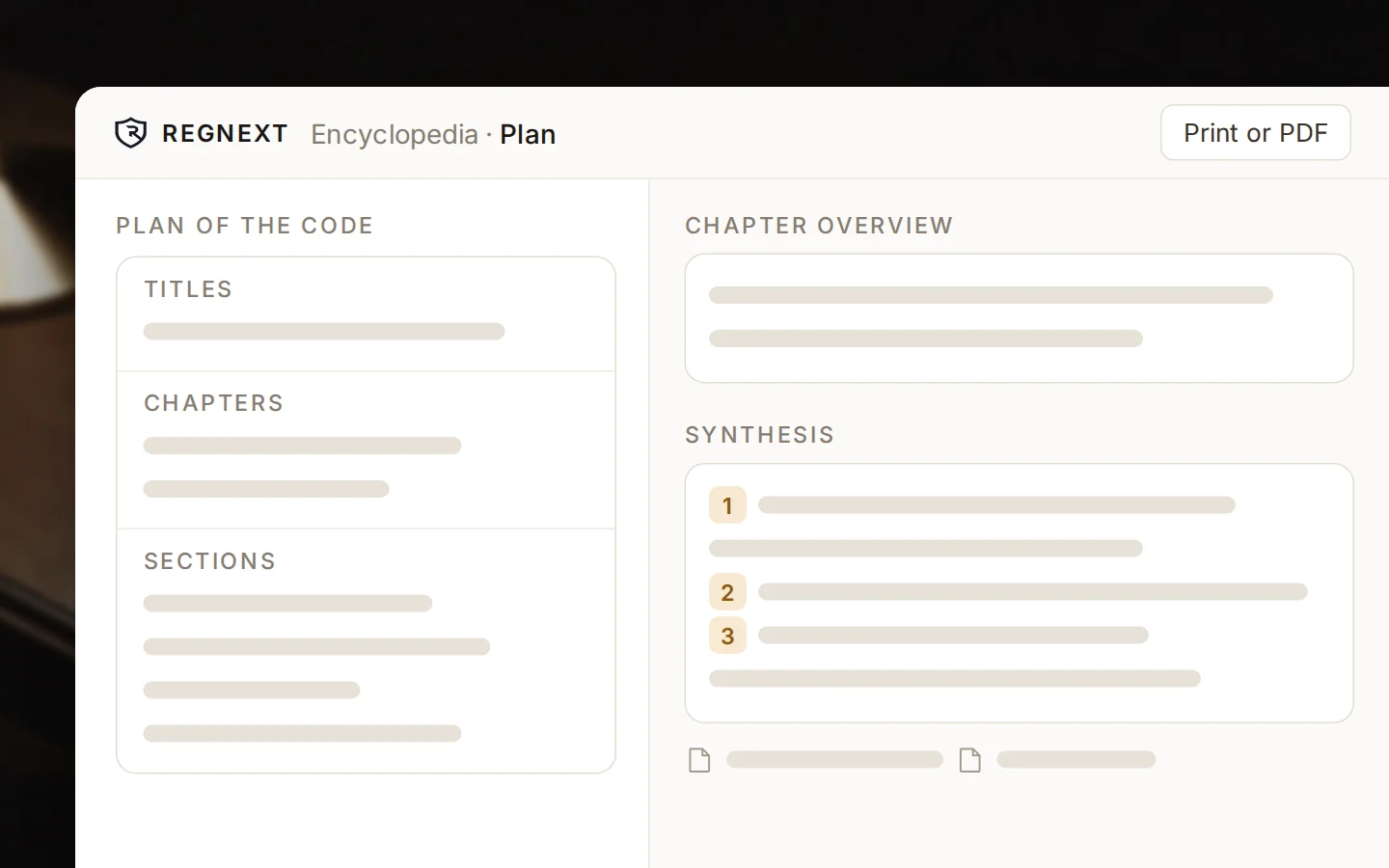
Open a code at its plan — titles, chapters, sections — and go as deep as you need. Each chapter has its own overview, and written syntheses cover key themes paragraph by paragraph, with their sources.

Start from a decision
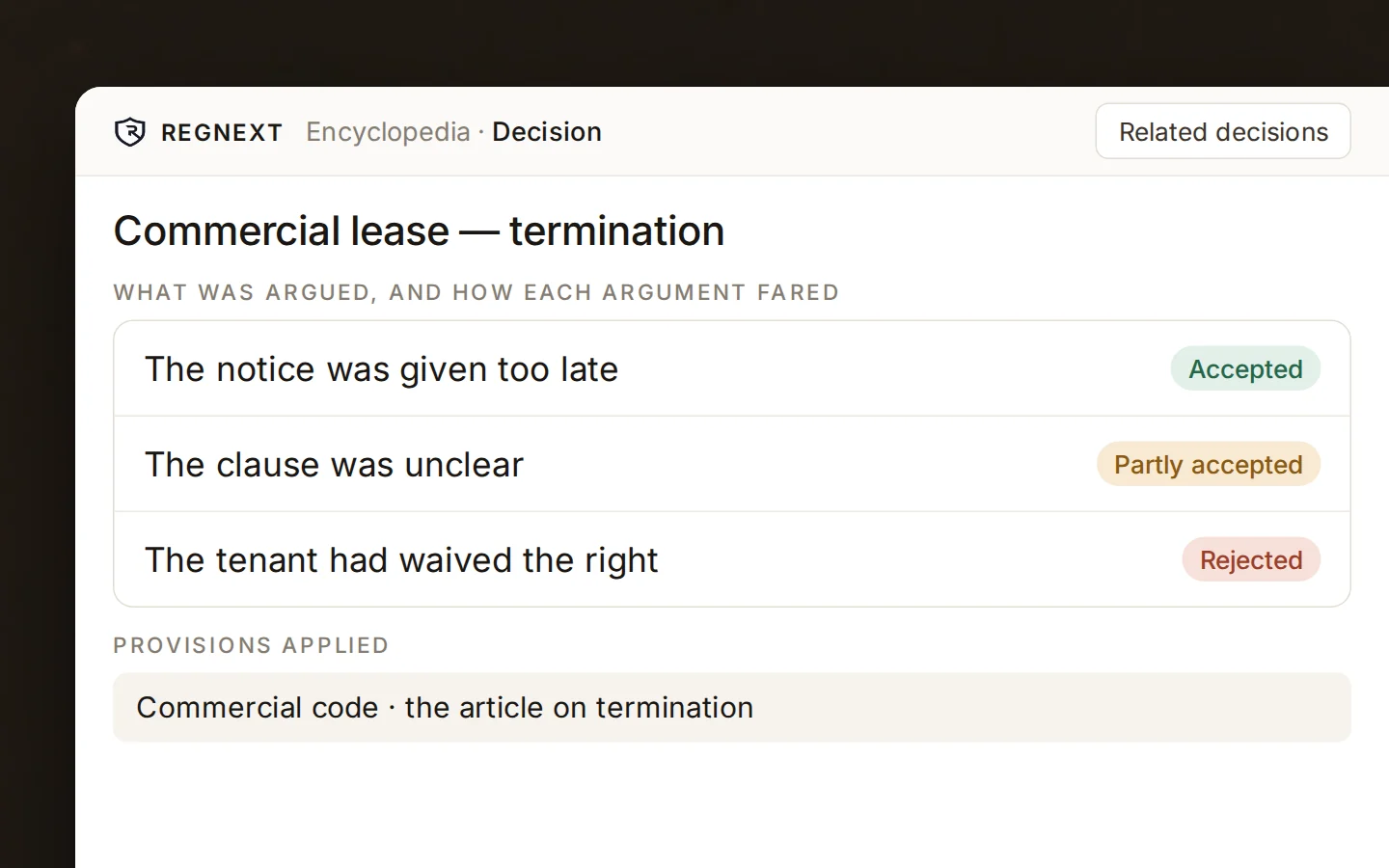
Decisions linked to an article come with the arguments raised before the court and how each one fared — accepted, partly accepted or rejected — together with the provisions it applies.

Built on the official text
Excerpts match the version of the text in force.
Where each entry comes from is shown with it.
When the corpus says nothing on a point, the entry says so.
A litigator opens the decisions linked to an article and sees which arguments the court accepted, partly accepted or rejected.
A lawyer new to a subject opens the plan of a code, reads the chapter overview and goes down to the article.
An in-house counsel starts from a national article and sees where the rule comes from in EU law and how it was carried over.
Four layers, starting from the official text. The article as it reads today, with its versions. The rules it sets, as questions and answers. The decisions that apply it, with the arguments raised. And where a national rule comes from in EU law.
Decisions linked to an article come with the arguments raised before the court and how each one fared: accepted, partly accepted or rejected. From a decision you can go back to the provisions it applies and to other decisions on the same provision.
The article as it reads today, in its place in the code. Excerpts match the version of the text in force. An entry also lists the versions of the article, including deferred repeals, and shows recent updates to the entry.
The entry says so. When the corpus is silent on a point, the entry does not fill the gap. Where each entry comes from is shown with it, so you know what you are reading.

Explore how RegNext supports regulatory intelligence and compliance execution in your industry.