Verification · Legal

Every statement, checked against its source.

Test any answer statement by statement against the official text it cites — or check your own memo or clause against the official corpus. Each statement comes back with a verdict, and a reference to a version no longer in force is flagged.

Version française

✓
SupportedThe official text supports the statement.
≈
Partly supportedThe text supports part of it.
?
Not settledThe texts read don’t settle it either way — an honest outcome, not an error.
✕
Not supportedThe text read does not support the statement.

Three ways to check

From the quickest check to the other side’s reading.

Start with the answer you have in front of you. Go further with any text of your own. Then read it the way an opponent would.

The quickest

Check an answer

Each statement of an Amanda answer is read against the official text of the sources it cites. Article numbers, dates and amounts are checked too.

From the answer itself — the verdicts appear right below it.

Any text

Check a whole text

Paste an answer, a memo or a contract clause, and have each claim checked against the official corpus.

Long texts are queued and checked in turn.

The other side

The opposing lawyer’s reading

The arguments against an answer and its weak points, laid out before someone else finds them — ready to download.

One click under any answer.

What the check looks at

The statement, the reference and the version.

Each statement is compared with the official version of the sources the answer relies on. Alongside the verdicts, the check lists every reference and figure it found — and flags any reference to a version no longer in force.

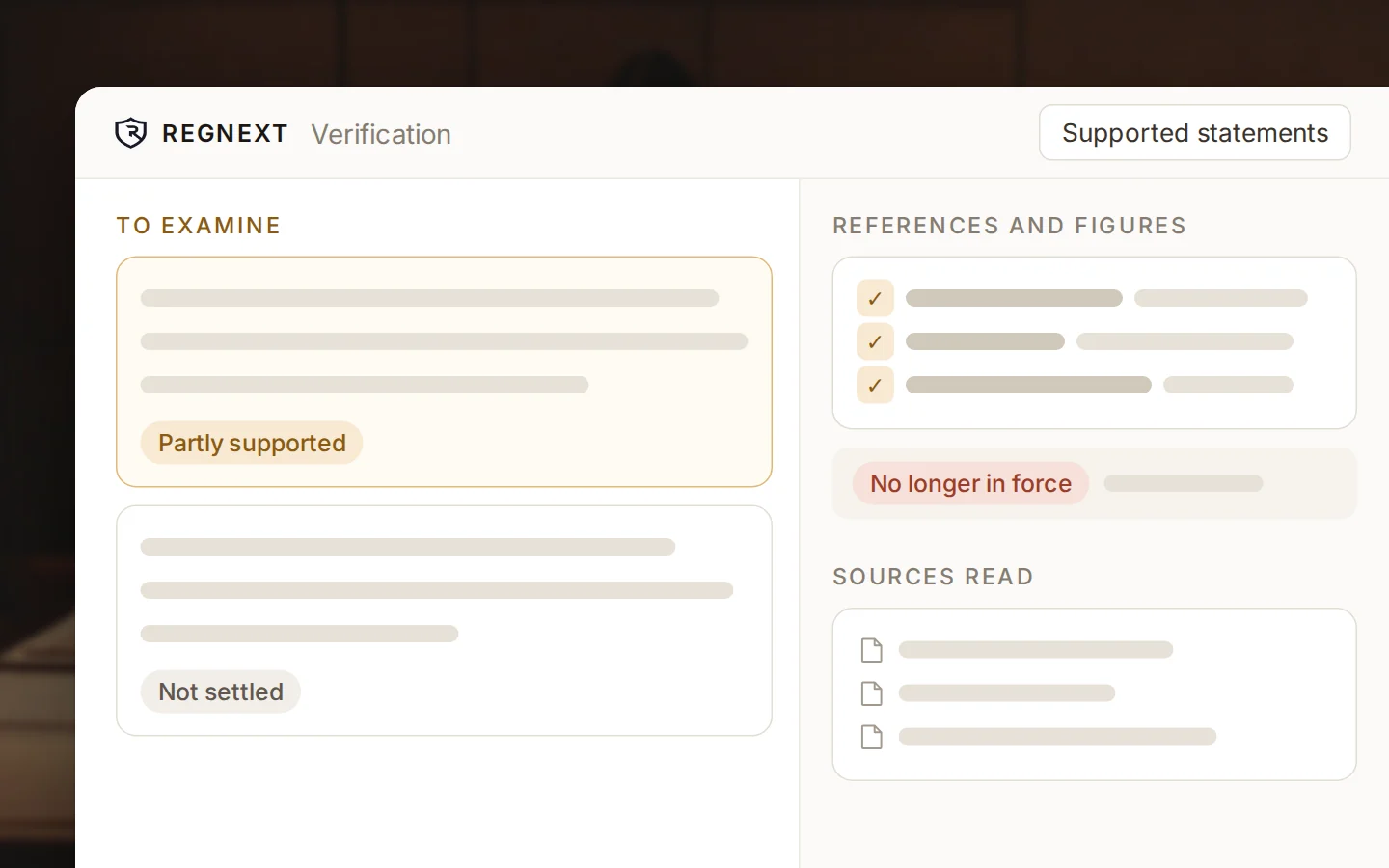
What needs your eye firstThe statements to examine lead; the supported ones are a click away.
References and figuresEach article number, date and amount, checked.
Out-of-force versionsA reference to a version no longer in force is flagged.
What was readThe check says how many sources it read.
The statements to examine first, one Partly supported and one Not settled, beside the references and figures found, one reference marked No longer in force, and the sources read

Your own texts

Check your memo before it goes out.

Paste a memo or a contract clause into the corpus check — or send any answer there from its menu — and each claim is tested against the official corpus.

Any textAn answer, your own memo, a clause from a contract.
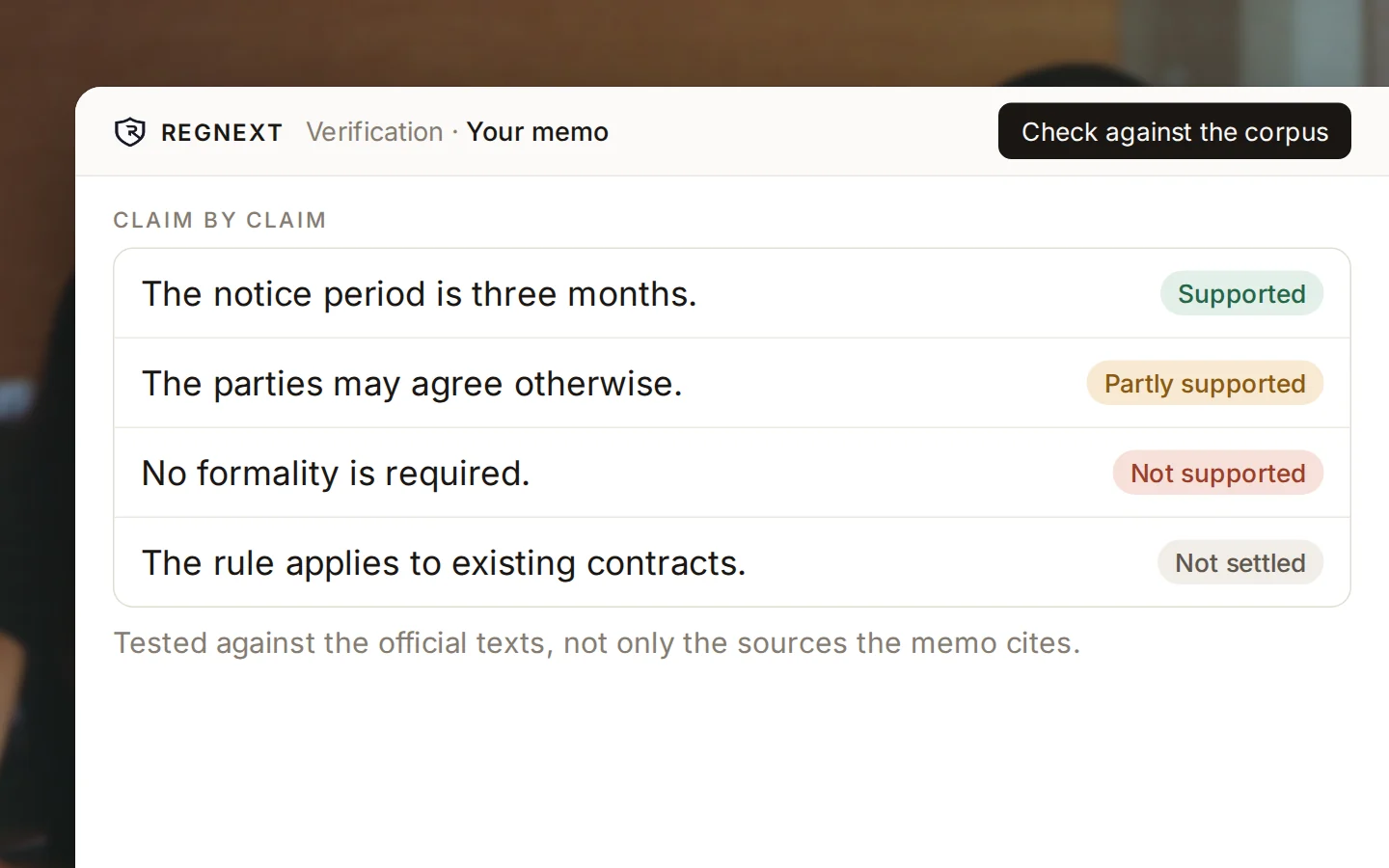
Claim by claimEach claim gets its own verdict.
Against the corpusNot just the sources an answer happened to cite.
Long texts tooThey are queued and checked in turn.
Four claims from a memo, each with its status: supported, partly supported, not supported, not settled

Built in

Honest about what it found — and what it didn’t.

A check, not an opinion

Every verification says it is automatic and not legal advice.

Doubt is a verdict

When the texts don’t settle a point, the check says so rather than forcing an answer.

The right version

Statements are read against the official text; references to versions no longer in force are flagged.

How teams use it

Check an answer

A lawyer checks an Amanda answer from the answer itself and reads first the statements that need examining.

A memo before sending

An associate pastes a memo into the corpus check and gets a verdict for each claim before it goes out.

The other side’s reading

A litigator asks for the opposing lawyer’s reading of an answer and downloads the arguments against it and its weak points.

Questions

What do the four results mean?

Supported: the official text supports the statement. Partly supported: the text supports part of it. Not settled: the texts read do not settle it either way. Not supported: the text read does not support the statement. Not settled is an honest outcome, not an error.

What exactly is checked?

Each statement is compared with the official version of the sources the answer relies on. Article numbers, dates and amounts are checked too. A reference to a version no longer in force is flagged, and the check says how many sources it read.

Can we check a text we wrote ourselves?

Yes. Paste a memo or a contract clause and each claim gets its own verdict. The text is tested against the official corpus, not just the sources an answer happened to cite. Long texts are queued and checked in turn.

Does a verification replace a lawyer’s review?

No. Every verification says it is automatic and not legal advice. When the texts do not settle a point, the check says so rather than forcing an answer. The statements to examine come first, and the supported ones are a click away.

image of brainstorming session for a productivity tools business

Transform compliance.
Accelerate outcomes.

Explore how RegNext supports regulatory intelligence and compliance execution in your industry.