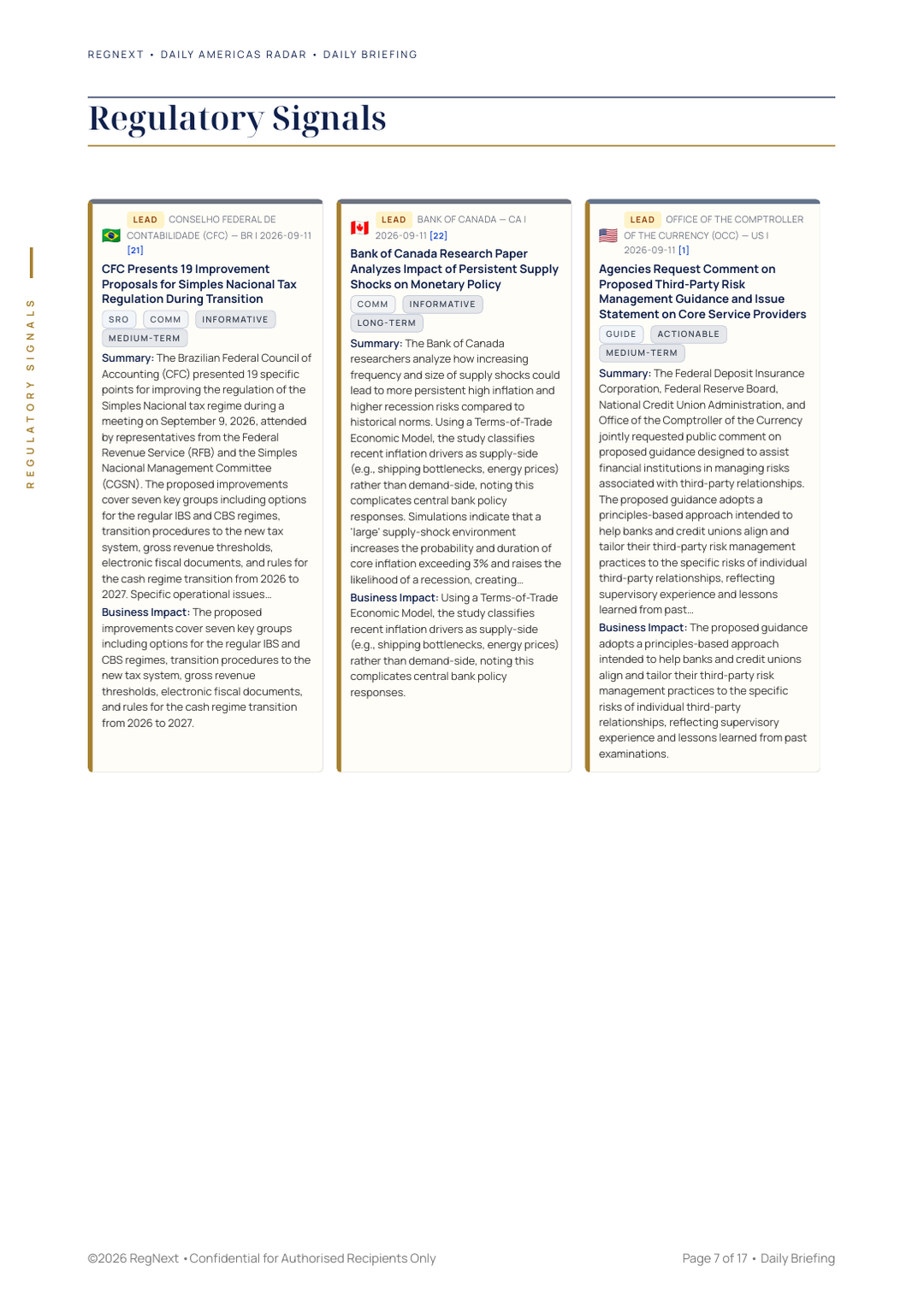
The Office of the Comptroller of the Currency just requested public comment on proposed third-party risk guidance and core service provider rules. Here's what it means for banking organizations and regulatory compliance leaders.
1️⃣ Office of the Comptroller of the Currency — Proposed Third-Party Risk Guidance
The OCC requested public comment on proposed third-party risk guidance and core service provider rules.
This regulatory update hits banking firms, compliance teams, and tech vendors managing third-party operational risks.
Regulated entities should review the draft rules during the comment period to plan required operational changes.
2️⃣ U.S. Department of the Treasury — GloBE Information Return for OECD Pillar Two
The Treasury welcomed the revised Global Anti-Base Erosion Information Return implementing OECD Pillar Two rules.
This update hits corporate tax leads, compliance officers, and tax advisors operating across global tax jurisdictions.
Tax teams must review updated reporting forms and align global data collection systems with new tax rules.
3️⃣ Presidência da República / Câmara dos Deputados — Import Tax Exemption Law
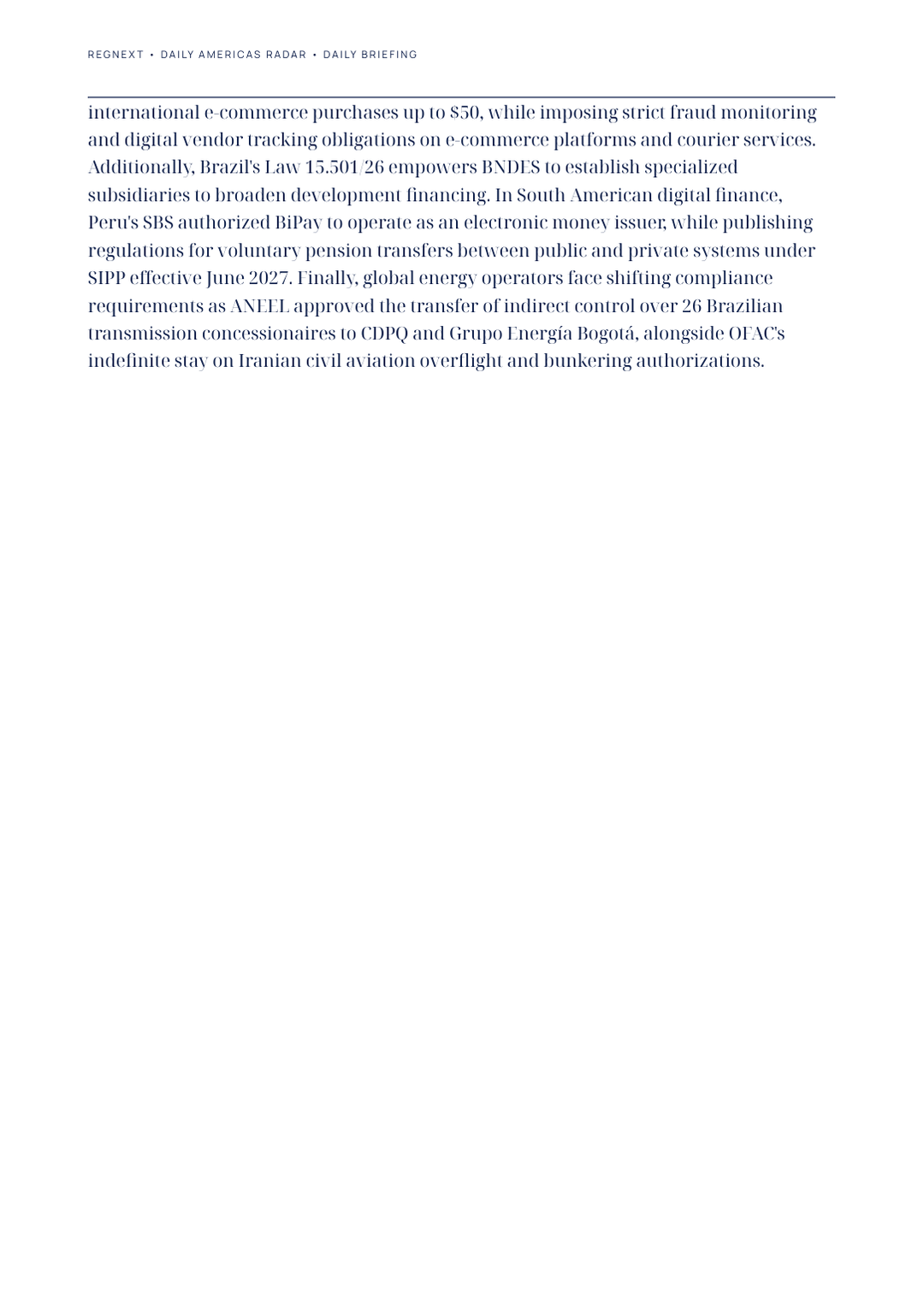
The Brazilian Presidency sanctioned Law 15.502/26, eliminating import tax duties on overseas buys up to 50 US dollars.
This legislative change hits digital sales platforms, logistics providers, postal teams, and retail merchants selling into Brazil.
Customs teams and online markets must update automated tariff calculation tools to reflect the tax exemption.
4️⃣ Presidência da República / BNDES — Law Authorizes BNDES Operating Subsidiaries
The Brazilian Presidency enacted Law 15.501/26, authorizing BNDES to create specialized corporate operating subsidiaries.
This law hits commercial banks, project developers, institutional funds, and corporate credit borrowers active in Brazil.
Strategic planners should monitor corporate structure updates as BNDES launches dedicated operational units.
5️⃣ Superintendencia de Banca, Seguros y AFP — BiPay Authorized as E-Money Issuer
Peru's SBS authorized BiPay as a licensed electronic money issuing company operating in the local market.
This decision hits digital wallet operators, payment service providers, fintech firms, and commercial banks in Peru.
Market leads should review interoperability rules and track market competition as new licensed payment issuers enter.
Full analysis in the attached RegNext Daily Americas Radar carousel.
— Elena Navarro · Managing Editor, RegNext
Daily Americas Radar · Friday 11 Sep 2026
#USRegulation #LATAMRegulation #FinancialRegulation #ComplianceIntelligence